Liverpool and the Unmaking of Britain
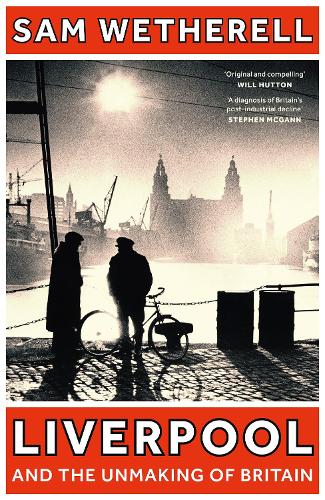
Liverpool and the Unmaking of Britain
hardback
Published:
27 February, 2025

Popular Books by Sam Wetherell
View All Books by Sam Wetherell
Description
Few cities in the world are as famous as Liverpool, the home of the modern world’s most celebrated rock group and of a legendary football team.
The city is equally notorious for its poverty, its ethnic and racial divides and, above all, its decline. For Liverpool was once a major port, growing rich on slavery, on trade with the Americas and the British Empire’s outposts in Africa and Asia. In the 1980s, it was described as ‘obsolete’. Yet the city fights on.
This is the epic history of Liverpool since the Second World War. It is a story of vast docklands shrinking and eventually vanishing when corporations discovered they could shift goods in containers and dispense with human workers, of industries like car manufacturing mushrooming and disappearing, of huge new suburbs being built and neglected. It is a moving and horrifying narrative of casual racism – Chinese sailors deported en masse in the aftermath of the war, systematic discrimination against the city’s Black population – and of resistance, culminating in the Toxteth riots in 1981. It is the story of a city fighting against a descent into obsolescence.
Liverpool also becomes a prism through which recent British history is brought into a new focus. It is the fascinating history of a single, iconic city. But it is also a warning of what the future may hold for many more communities.
More Details
| Type | Book |
|---|---|
| ISBN13 | 9781801108881 |
| ISBN10 | 1801108889 |
| Number Of Pages | 448 |
| Item Weight | 671 g |
| Product Dimensions | 162 x 236 x 44 mm |
| Publisher / Reseller | Bloomsbury Publishing PLC |
| Format | hardback |
Media Reviews
In his absorbing and richly detailed new book, Sam Wetherell tells a Liverpool story which highlights Merseyside’s unique qualities while at the same time showing how the recent past of one particular city might foretell the future of Britain as a whole. * Alan Allport, author of Britain at Bay *
Liverpool becomes an original and compelling lens through which Sam Wetherell reassesses our industrial, maritime and social history, and provides an arresting account of Britain’s decline and fall. * Will Hutton, author of This Time No Mistakes *
Wetherell cleverly projects a diagnosis for Britain's post-industrial decline through the prism of Liverpool's hidden social histories. * Stephen McGann *
Staggeringly good... the most thoughtful and creative history of modern Britain for a long, long time. * Bill Schwarz *
This book is a persuasive argument for Liverpool as a lens through which to understand British history. The trajectory of this extraordinary port city, as a major node in the ignominious networks of slave trade and colonial commerce, a palimpsest of immigrant communities including the oldest Irish, Black and Chinese populations in England, a site of working-class revolt, a testing ground for Thatcherite policies, and a troubling example of 'managed' obsolescence. Wetherell demands that we see Liverpool as a prophecy of what might befall us all in Britain. * Laleh Khalili, author of Sinews of War and Trade *
It is not an overstatement to say that this book will change the way we think about the history of modern Britain. * Emily Baughan, author of Saving the Children and 2024 BBC New Generation Thinker *
[A] fascinating and quietly iconoclastic book * History Today *
Sparkling... should be read by anyone with an interest in the recent history of Britain, and where on earth we go from here * The TLS *
The book stands as an object lesson in the enduring power of theoretically informed historical writing. -- Isaac Rose
GoodReads Reviews
Author's Bio
Sam Wetherell is a Senior Lecturer in the History of Britain and the World at the University of York, specialising in urban and economic history. art-making. He is the author of Foundations: How the Built Environment Made Twentieth-Century Britain, and has published articles for academic and popular audiences about the history of community arts, the development of urban policy, contemporary politics, climate change, deindustrialisation and football.