Indigenous Language Education in Critical Times :Voices of Community Reclamation in the Americas - Language, Education and Diversity
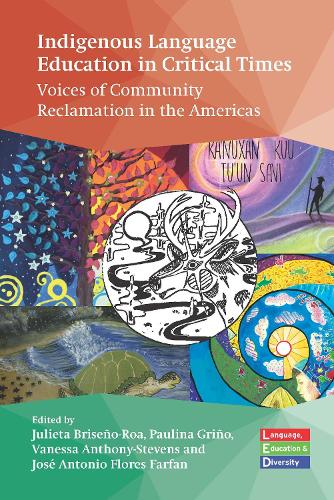
Indigenous Language Education in Critical Times :Voices of Community Reclamation in the Americas - Language, Education and Diversity
paperback
Published:
15 July, 2025

Description
This book builds a space in which a diversity of voices – Indigenous teachers, activists and committed academics – are foregrounded in the processes of Indigenous education with the goal of Indigenous language reclamation. It decenters state systems of education (e.g. schooling) and instead considers the efforts of teachers (defined broadly), community activists and scholars who are developing initiatives to support Indigenous language practices in, around and beyond schooling, thereby emphasizing diverse processes of language reclamation in complex and varied settings. The authors invite the reader to reconsider language reclamation in the face of climate change and neocolonial exploitation, offering a source of radical hope for the future. Central to the book are narratives regarding community-based collaborations, which subvert the asymmetrical power relations between academia and educational practitioners and activists, and call into question the categories constructed by a top-down approach, as well as the colonial relationships that linguistic anthropology and linguistics have constructed within the spaces and people they ‘study’.
More Details
| Type | Book |
|---|---|
| ISBN13 | 9781800418387 |
| ISBN10 | 1800418388 |
| Number Of Pages | 216 |
| Item Weight | 340 g |
| Product Dimensions | 156 x 234 x 12 mm |
| Publisher / Reseller | Multilingual Matters |
| Format | paperback |
Media Reviews
The Americas are expansive, beautiful, and resilient human and more than human communities. Life is always languaged here, and the authors in this volume bring forward this recognition through lived experience. They share lessons and ideas embedded in powerful stories and narratives. Carefully stewarded by dedicated editors, this collection is a delight to read and an inspiration to remember. * Elizabeth Sumida Huaman, University of Minnesota, USA *
Immersing oneself in this powerful collection of transcultural narratives of resilience and persistence in the daily context of 'uneasy co-habitation of severely threatened "local" languages alongside dominant "global" ones' is to become embraced in an empowering experience of solidarity with the storyteller-authors. Solidarity in tenacity of spirit - qatsi’nangwa, in the Hopi sense, as 'the will to survive' through our gifts of languages. * Sheilah E. Nicholas, University of Arizona, USA *
The editors of Indigenous Language Education in Critical Times have brought together a diverse group of “Indigenous teachers, community activists and committed academics” to discuss their efforts to reclaim ancestral languages in South and North America in both rural and urban environments [...] Of particular interest is how some charter schools (alternative public schools) in the United States and Indigenous community schools in Mexico are promoting an Indigenous cultural revival, using land-based curriculum and place-based pedagogy.
* J. A. Reyhner, Northern Arizona University, USA, CHOICE, January 2026 Vol. 63 No. 5 *Author's Bio
Julieta Briseño-Roa is Professor-Researcher at the Centro de Investigaciones y Estudios Superiores en Antropología Social (CIESAS), Mexico. She considers it fundamental to contribute to land-based education as a form of cultural reclamation, defense of the territory and action against the climate catastrophe.
Paulina Griñó is Professor in the Facultad de Educación, Universidad Autónoma de Chile. She is part of educational initiatives which reconnect community knowledge with school curricula.
Vanessa Anthony-Stevens is an Associate Professor in the Department of Curriculum and Instruction at the University of Idaho, USA. Her more than 20-year career in Indigenous education and Tribal Nation-building efforts centers on practices and policies of educational sovereignty.
José Antonio Flores Farfán is Professor in the Centro de Investigaciones y Estudios Superiores en Antropología Social (CIESAS), Mexico. Over several decades he has worked with Indigenous communities to produce materials which vindicate the use of minoritized languages.