Terrorist Recruitment and the International System
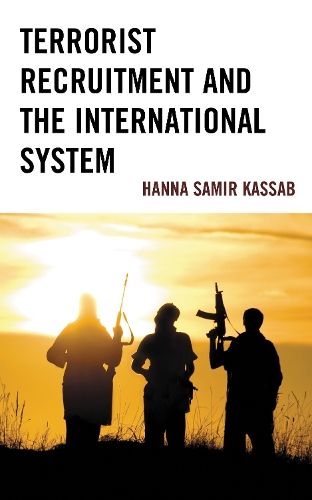
Terrorist Recruitment and the International System
paperback
Published:
23 June, 2021

Popular Books by Hanna Samir Kassab
View All Books by Hanna Samir Kassab


Description
More Details
| Type | Book |
|---|---|
| ISBN13 | 9781793615169 |
| ISBN10 | 1793615160 |
| Number Of Pages | 174 |
| Item Weight | 268 g |
| Product Dimensions | 154 x 218 x 14 mm |
| Publisher / Reseller | Bloomsbury Publishing Plc |
| Format | paperback |
Media Reviews
Kassab (East Carolina Univ.) analyzes the complex yet significant relationship between terrorist recruitment and weak states, emphasizing that power vacuums benefit terrorist recruitment in important (and complicated) ways. The overall result, Kassab argues, is the destabilization of the international system. The book is largely theoretical and based on secondary sources (magazine and newspaper articles and scholarly books and journal articles), government documents, and nongovernmental organization reports. The author organizes the book's six main chapters in two sections—"Levels of Analysis" and "Recommendations"— each comprising three chapters. In the first section Kassab examines terrorism at three distinct levels: the individual, the nation-state, and the international system. In the second section he makes recommendations for minimizing terrorist recruitment, leveraging a detailed analysis of the 2003 invasion of Iraq and its serious ramifications, especially the advent of the Islamic State. The author uses this instructive case study to consider short- and long-term solutions. This book is valuable for examining such vital concepts as resilience, the corrosive effects of corruption and underdevelopment on weak states, and the potential of inclusive political institutions to bolster a state’s legitimacy and thereby inhibit terrorist recruitment. Summing Up: Highly recommended. Lower-division undergraduates through faculty. * Choice Reviews *
“In his new book Terrorist Recruitment in the International System, Dr. Hanna S. Kassab offers new and important insights into the role of state failure or national power vacuums in providing key gateways for the recruitment of would-be terrorists. Terrorist groups and other non-state armed actors opportunistically fill the spaces where the state is absent or has lost legitimacy. The opportunities presented by weak states for terrorist recruitment are often overlooked in understanding how and why resilient terrorist groups thrive despite the years of effort to defeat their networks.” -- Douglas Farah, President, IBI Consultants, LLC
Author's Bio
Hanna Samir Kassab is teaching assistant professor at East Carolina University.