Ephyra-Epirus: The Mycenaean Acropolis :Results of the Excavations 1975-1986 and 2007-2008
Ephyra-Epirus: The Mycenaean Acropolis :Results of the Excavations 1975-1986 and 2007-2008
paperback
Published:
2 July, 2020
paperback
Published:
2 July, 2020

Standard worldwide delivery by
Wed, July 15 - Mon, July 20
Order within
0
Popular Books by Evangelia Papadopoulou
View All Books by Evangelia Papadopoulou
Description
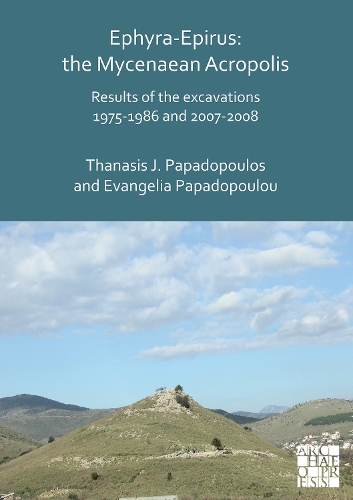
Ephyra-Epirus: The Mycenaean Acropolis presents the results of the 1975-1986 and 2007-2008 excavations on the prehistoric-Mycenaean acropolis of Ephyra, one of the most important Bronze Age sites of Epirus. Ephyra is a small coastal fortified site in the region of the lower Acheron valley and the only one that has been systematically excavated, producing impressive and, in some cases, unique Bronze Age remains (architectural, burial, pottery, artefacts). It stands on a high hill, in an exceptional position that overlooks and commands the lower Acheron valley and provides easy access both to the nearby Glykis Limin, the Ionian sea and the hinterland. Moreover, it is surrounded by three successive perivoloi, two of which (middle and lower) belong to LH III times, with a monumental south entrance gate.
Ephyra fits the criteria of a major fortified settlement, as it covers an important and strategic prehistoric citadel, cemetery, residence and port of call for those travelling to the West. Strictly based on the archaeological data presented, this study suggests that the acropolis had a permanent Mycenaean population during the entire LH III period and continued to thrive after the collapse of Mycenaean centres until (and including) the Archaic period. Finally, it is tempting to suggest a correlation of the archaeological record with the Homeric tradition (Homeric Efýra, Od.a..259,b.238).
Ephyra fits the criteria of a major fortified settlement, as it covers an important and strategic prehistoric citadel, cemetery, residence and port of call for those travelling to the West. Strictly based on the archaeological data presented, this study suggests that the acropolis had a permanent Mycenaean population during the entire LH III period and continued to thrive after the collapse of Mycenaean centres until (and including) the Archaic period. Finally, it is tempting to suggest a correlation of the archaeological record with the Homeric tradition (Homeric Efýra, Od.a..259,b.238).
More Details
| Type | Book |
|---|---|
| ISBN13 | 9781789693713 |
| ISBN10 | 1789693713 |
| Number Of Pages | 148 |
| Item Weight | 480 g |
| Product Dimensions | 205 x 290 x 7 mm |
| Publisher / Reseller | Archaeopress |
| Format | paperback |
See More +
Author's Bio
Thanasis J. Papadopoulos obtained his PhD in Aegean Prehistoric Archaeology at Bedford College, University of London in 1972. He has worked at the University of Ioannina, the University of Crete and Ionian University as epimeletes, lecturer, associate professor, visiting professor and full professor, teaching Aegean Prehistoric, Cypriot, Egyptian and Neareastern Archaeology. ;
Evangelia Papadopoulou is an archaeologist with a PhD in Prehistoric Archaeology from the University of Ioannina, Greece. Since 1996, she has been an active member of excavations at Patras, S.Olynthus at Halkidiki, Dodoni, Ithaca and Jordan, overseeing archaeological research and educating students on excavation techniques.