In Praise of Disobedience :The Soul of Man Under Socialism and Other Writings
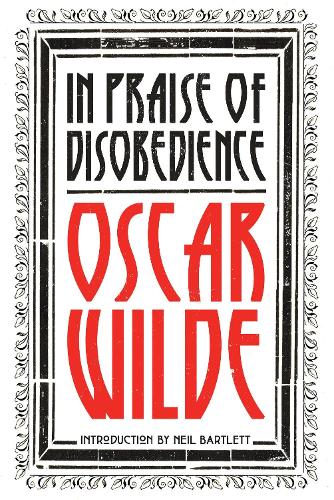
In Praise of Disobedience :The Soul of Man Under Socialism and Other Writings
hardback
Published:
13 November, 2018

Popular Books by Oscar Wilde
View All Books by Oscar Wilde





Description
In a witty introduction, playwright, novelist and Wilde scholar Neil Bartlett explains what made this point in the writer's life central to his genius and why Wilde remains a provocative and radical figure to this day.
Included here are the entirety of Wilde's foray into political philosophy, The Soul of Man Under Socialism; the complete essay collection Intentions; selections from The Picture of Dorian Gray as well as its paradoxical and scandalous preface; and some of Wilde's greatest fictions for children. Each selection is accompanied by stimulating and enlightening annotations. A delight for fans of Oscar Wilde, In Praise of Disobedience will revitalize an often misunderstood legacy.
More Details
| Type | Book |
|---|---|
| ISBN13 | 9781788730334 |
| ISBN10 | 178873033X |
| Number Of Pages | 336 |
| Item Weight | 521 g |
| Product Dimensions | 140 x 210 x 32 mm |
| Publisher / Reseller | Verso Books |
| Format | hardback |
Media Reviews
Wilde offers us an important reminder of virtues we as a society may have for a time lost: the need to strive for utopias; the inevitability of socialism if our world is to survive; the need to reinvigorate humanity's spirit of rebelliousness and disobedience, and to challenge, not accept, the injustices and inequalities we see all around us. The world needs Oscar Wilde and his daring, beautiful ideas today more than ever. -- Hans Rollman * PopMatters *
Author's Bio
Oscar Fingall O'Flahertie Wills Wilde was born in Dublin in 1854. His novel, The Picture of Dorian Gray (1891), and social comedies Lady Windermere's Fan (1892), A Woman of No Importance (1893), An Ideal Husband (1895), and The Importance of Being Earnest (1895), established his reputation. In 1895, following his libel action against the Marquess of Queensberry, Wilde was sentenced to two years' imprisonment for homosexual conduct, as a result of which he wrote The Ballad of Reading Gaol (1898), and his confessional letter De Profundis (1905). On his release from prison in 1897 he lived in obscurity in Europe, and died in Paris in 1900.