Amílcar Cabral :The Life of a Reluctant Nationalist
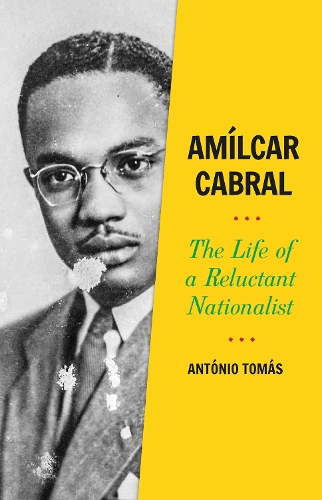
Amílcar Cabral :The Life of a Reluctant Nationalist
hardback
Published:
29 April, 2021

Popular Books by Antonio Tomas
View All Books by Antonio Tomas
Description
More Details
| Type | Book |
|---|---|
| ISBN13 | 9781787381445 |
| ISBN10 | 1787381447 |
| Number Of Pages | 272 |
| Item Weight | 1000 g |
| Publisher / Reseller | C Hurst & Co Publishers Ltd |
| Format | hardback |
Media Reviews
'[A] welcome revisionist biography.' -- History Today
'Antonio Tomás’ … book on Amílcar Cabral takes us back to the crucible of decolonisation and permits us to assess its aspirations and limitations anew.' -- Africa Is a Country
'This is a beautiful book. It is elegant. It is elegiac. It is exciting: readers are on the verge of historical unearthings and historiographical revelations every time the pages turn.' -- Theoria
'This is a unique interpretation of an iconic revolutionary using recently opened state security police archives. It challenges the accepted narrative and forces scholars to rethink ideas about victory over colonial rule in the Portuguese colonies as well as continues the debate about Cabral’s contribution to this.' -- Joye Bowman, Professor of History, Associate Dean of Research, University of Massachusetts Amherst
'This impressive new biography uses mainly Portuguese sources to challenge many of the myths about Cabral’s life and places his ideas and achievement firmly within the context of Cape Verdian history.' -- Malyn Newitt, Emeritus Professor of History, King’s College London
'On the basis of newly available archival sources, Tomas provides a powerful, highly original and much-needed rethinking of Cabral’s enduring impact while also engaging with contemporary debates on identity, belonging and the role of ideas in African politics, and transcending the all-too-frequent hagiography that surrounds his legacy.' -- Ricardo Soares de Oliveira, Professor of the International Politics of Africa, University of Oxford
'A very refreshing, at times moving, biography of Amílcar Cabral. The book distinguishes Cabral from other renowned anti-colonial leaders and thinkers, deftly handling the dilemmas, tensions and ambiguities of the struggles of Guinea-Bissau and Cape Verde for independence from Portugal and unpicking the sad narrative behind his killing.' -- Christopher Cramer, Professor of the Political Economy of Development, SOAS, University of London
Author's Bio
António Tomás is a senior lecturer at the University of Cape Town (South Africa). He holds a PhD in Anthropology from Columbia University, in New York. He has worked as a journalist in Angola and Portugal and has written extensively on issues related to Lusophone Africa.