The Little Book of Autism FAQs :How to Talk with Your Child about their Diagnosis and Other Conversations
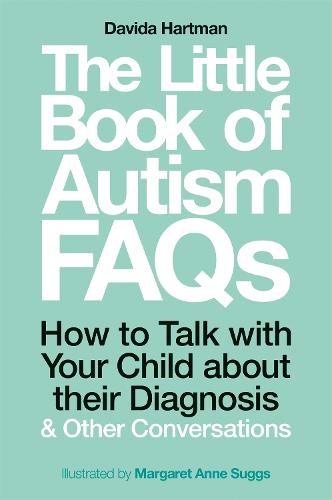
The Little Book of Autism FAQs :How to Talk with Your Child about their Diagnosis and Other Conversations
paperback
Published:
19 September, 2019

Popular Books by Davida Hartman
View All Books by Davida Hartman
Description
Empowering and practical, this guide is the perfect companion for parents who are finding it difficult to tell their children about their autism diagnosis. It provides a realistic yet uplifting approach to autism, treating it not as a disability but as a difference.
Not telling children about their autism diagnosis can have a significant negative impact on their mental health; by equipping parents with a language of positivity around autism, the book will make a difference to many children on the spectrum. It advises on how and when to talk to autistic children with both high and low care needs, and provides guidance on supporting children's relationships with peers at school, as well as how to broach the conversation with the child's siblings.
Concise and easy to read, The Little Book of Autism FAQs answers parents' questions with accessible language, preparing them to approach this difficult conversation in a constructive manner.
More Details
| Type | Book |
|---|---|
| ISBN13 | 9781785924491 |
| ISBN10 | 1785924494 |
| Number Of Pages | 112 |
| Item Weight | 149 g |
| Product Dimensions | 152 x 228 x 12 mm |
| Publisher / Reseller | Jessica Kingsley Publishers |
| Format | paperback |
Media Reviews
Davida Hartman gives parents an honest, nuanced and above all empowering and heart-warming answer to perhaps the most pertinent question they have: Do we tell our child that he/she has autism? -- Peter Vermeulen, Autism in Context, Belgium
The more I read on, the more there was to love. Hartman covers difficult questions in a compassionate yet straightforward manner, offering clear and positive guidance to parents who may be wondering how on Earth to talk to their children about their diagnosis - all the while discussing autism and neurodiversity in a respectful and encouraging way. -- Chris Bonnello, author of AutisticNotWeird.com
GoodReads Reviews
Author's Bio
Davida (she/her) is an Adjunct Professor in the UCD School of Psychology and Chartered Educational & Child Psychologist with the Psychological Society of Ireland. She founded and is Clinical Director at The Adult Autism & ADHD Practice (www.adultautism.ie), a fully online service that covers the UK and Ireland, with a vision of providing respectful, neurodiversity affirmative, autism and ADHD identification (assessment) work within a team that is shaped by the Autistic and ADHD voice and experience. She is also co-founder, Clinical Director and Principal Psychologist at The Children's Clinic, (www.thechildrensclinic.ie) based on these same principals. Established in 2016, The Children's Clinic now has locations now across Ireland supporting Autistic and otherwise neurodivergent children 0-18 with a focus on best practice neurodiversity affirmative child autism identifications. Prior to this, Davida worked for many years within the Irish public health service, in teams supporting Autistic and otherwise neurodivergent children. Davida has also brought to Ireland the not for profit Gig Buddies (www.gigbuddiesireland.ie), where she is a Board Director. Gig Buddies aims to reduce loneliness and increase social participation for adults with a learning disability who may or may not also be Autistic. Davida is late identified ADHD and part of a multiply neurodivergent family. She is a passionate ally of the Autistic community. Davida has written several books (alone and alongside her Autistic colleagues) with Jessica Kingsley Publishers in the area of Autistic experience, including the first ever book on adult autism identification and the first ever book on neurodiversity affirmative child autism identification.