Indigenous Politics :Institutions, Representation, Mobilisation
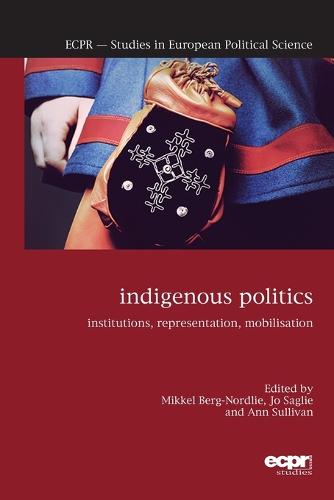
Indigenous Politics :Institutions, Representation, Mobilisation
paperback
Published:
19 August, 2016

Popular Books by Mikkel Berg-Nordlie
View All Books by Mikkel Berg-Nordlie
Description
More Details
| Type | Book |
|---|---|
| ISBN13 | 9781785522352 |
| ISBN10 | 1785522353 |
| Number Of Pages | 350 |
| Item Weight | 585 g |
| Product Dimensions | 156 x 224 x 21 mm |
| Publisher / Reseller | ECPR Press |
| Format | paperback |
Media Reviews
The study of indigenous peoples received a new impetus in the late 1960s, when activist politics drew global attention to the status of these marginalised groups. While an impressive range of studies from many disciplines - notably history, anthropology, sociology and law - has since then advanced our understanding of indigenous society, the contribution of political science has for long been limited. This volume is an important and timely intervention in analysis of the politics of indigenous peoples. It offers a valuable, systematic overview of the comparative politics of indigenous societies, enriched by well-informed case studies of the more prominent of these. The editors and contributors are to be congratulated for bringing the politics of indigenous societies so decisively into the academic mainstream. John Coakley, Queen's University Belfast and University College Dublin Indigenous politics has become more important during the last couple of decades. This book offers an interesting insight into institutional variation in indigenous political arrangements, with comprehensive information on New Zealand, Australia, Bolivia, Brazil, USA, Canada and the Nordic countries. Even given the great variation across countries and continents, indigenous politics is increasingly influenced by international processes and by developments in international law. This book emphasises the importance of these changes, but also underlines the extensive differences among countries adapting to them. In doing so, it highlights the importance of each country's historical traditions, in which the changing relationship between indigenous sovereignty and co-optation is playing itself out. An important read for anyone interested in this field of growing interest and relevance. Per Selle, University of Bergen