Visions of Judicial Review :A Comparative Examination of Courts and Policy in Democracies
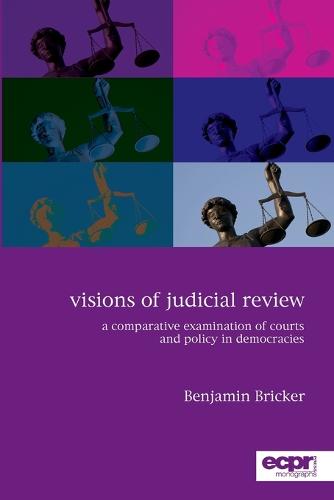
Visions of Judicial Review :A Comparative Examination of Courts and Policy in Democracies
paperback
Published:
26 January, 2016
paperback
Published:
26 January, 2016

Standard worldwide delivery by
Tue, July 21 - Thu, July 30
Order within
0
Condition:
NEW
$53.68
RRP
$56.24
You save $2.56 (5%)
Available
20+
in stock
FREE Returns within 30 days
Description
Judicial review is increasingly prevalent in modern democratic government. Yet with unelected judges reviewing - and potentially overturning - the work of the people's representatives, it also has long been, in Justice Oliver Wendell Holmes' words, `the gravest and most delicate' task that courts undertake. This book establishes a framework to consider the value of judicial review in modern democracy, grouping answers to this question into one of three main arguments, or `visions' for judicial review: legalist; rights-protecting; and majoritarian. The strength of these visions is then tested with an original dataset of constitutional court outcomes from four European courts - Poland, Slovenia, the Czech Republic, and Latvia - to determine whether any vision meets its promise. In fact, there is surprising support for the potentially majoritarian benefits of judicial review - a finding that challenges much of our existing theory regarding the value of the courts in modern democracy.
More Details
| Type | Book |
|---|---|
| ISBN13 | 9781785521478 |
| ISBN10 | 1785521470 |
| Number Of Pages | 188 |
| Item Weight | 141 g |
| Publisher / Reseller | ECPR Press |
| Format | paperback |
See More +
Media Reviews
"Judicial review is increasingly prevalent in modern democratic government. Yet with unelected judges reviewing - and potentially overturning - the work of the people's representatives, it also has long been, in Justice Oliver Wendell Holmes' words, `the gravest and most delicate' task that courts undertake. '...provides new theoretical and empirical insight into comparative courts and judging, particularly in Central and Eastern European democracies." -- Christy L. Boyd, University of Georgia