Political Violence in Context :Time, Space and Milieu
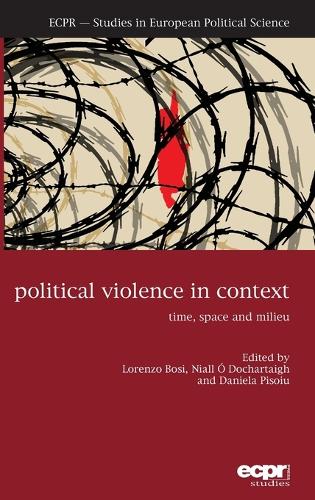
Political Violence in Context :Time, Space and Milieu
hardback
Published:
1 January, 2016
hardback
Published:
1 January, 2016

Standard worldwide delivery by
Mon, August 3 - Thu, August 6
Order within
0
Popular Books by Lorenzo Bosi
View All Books by Lorenzo Bosi
Description
While much of the work in this field focuses on individual psychology or radical ideology, Bosi, O Dochartaigh, Pisoiu and others take a fresh, innovative look at the importance of context in generating mobilisation and shaping patterns of violence. The cases dealt with range widely across space and time, from Asia, Africa and Europe to the Americas, and from the Irish rebellion of 1916 through the Marxist insurgency of Sendero Luminoso to the `Invisible Commando' of Cote d'Ivoire. They encompass a wide range of types of violence, from separatist guerrillas through Marxist insurgents and Islamist militants to nationalist insurrectionists and the distinctive forms of urban violence that have emerged at the boundary between crime and politics. Chapters offer new theoretical perspectives on the decisive importance of the spatial and temporal contexts, and supportive milieux, in which parties to conflict are embedded, and from which they draw strength.
More Details
| Type | Book |
|---|---|
| ISBN13 | 9781785521447 |
| ISBN10 | 1785521446 |
| Number Of Pages | 324 |
| Item Weight | 290 g |
| Publisher / Reseller | ECPR Press |
| Format | hardback |
See More +
Media Reviews
'Time, space and milieux have for too long been silences in the research on social movements. This most welcome collection helps fill the gap through theoretical reflections and empirical evidence, and it contextualizes political violence, recognising the importance of contingency and agency within a relational approach.' - Donatella della Porta, European University Institute 'This is an excellent volume which shows why, when and how social contexts shape the dynamics of violence. Combining theoretical insights with meticulous and wide ranging empirical studies from all over the world, this book makes a powerful case for the centrality of relational analysis in the study of violent conflicts.' - Sinisa Malesevic, University College Dublin