Darkness at Noon
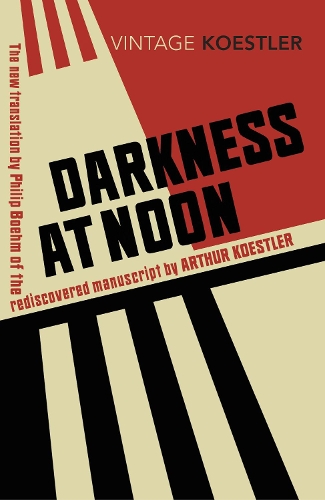
Darkness at Noon
paperback | English
Published:
17 September, 2020

Popular Books by Arthur Koestler
View All Books by Arthur Koestler
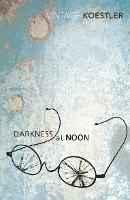


Description
A brilliant new translation of Koestler's long-lost original manuscript. A chilling and unforgettable 20th century classic.
From a prison cell in an unnamed country run by a totalitarian government Rubashov reflects. Once a powerful player in the regime, mercilessly dispensing with anyone who got in the way of his party’s aims, Rubashov has had the tables turned on him. He has been arrested and he’ll be interrogated, probably tortured and certainly executed.
Darkness at Noon is as gripping as a thriller and a seminal work of twentieth-century literature. Published in Great Britain in 1940, it was feted by George Orwell, went on to be translated into thirty languages and is considered the finest work of pre-eminent European master, Arthur Koestler. And yet the novel’s worldwide reputation has, for over seventy years, been based on the first incomplete and inexpert English translation – Koestler’s original manuscript was lost when he fled the German occupation of Paris in 1940.
In 2016, a student discovered that long-lost manuscript in a Zurich archive. At last, with the publication of this new translation of the rediscovered original, Koestler’s masterpiece can be experienced afresh and in its entirety for the first time.
THE NEW TRANSLATION BY PHILIP BOEHM
More Details
| Type | Book |
|---|---|
| ISBN13 | 9781784873196 |
| ISBN10 | 1784873195 |
| Number Of Pages | 304 |
| Item Weight | 218 g |
| Product Dimensions | 131 x 198 x 19 mm |
| Publisher / Reseller | Vintage Publishing |
| Format | paperback |
Media Reviews
Darkness at Noon is the sort of novel that transcends ordinary limitations...written with such dramatic power, with such warmth of feeling, and with such persuasive simplicity * New York Times, 1941 *
A piece of brilliant literature
A remarkable book, a grimly fascinating interpretation of...all revolutionary dictatorships, and at the same time a tense and subtly intellectualised drama of prison psychology * Times Literary Supplement *
[Darkness At Noon] is written from terrible experience. From knowledge of the men whose struggles of mind and body he describes. Apart from its sociological importance, it is written with a subtlety and an economy which class it as great literature. I have read it twice without feeling that I have learned more than half of what it has to offer me- Koestler approaches the problem of ends and means, of love and truth and social organisation, through the thoughts of an old Bolshevik, Rubashov, as he awaits death in a GPU prison * New Statesman *
Along with Animal Farm and 1984, this book formed part of the essential bookshelf of those intellectuals who repudiated their early illusions about the Soviet Union -- Christopher Hitchens * The Week *
Darkness at Noon [is] a guided tour of a totalitarian mind... it gave me a deep, life-long interest in politics -- Rafael Behr * Guardian *
One of the few books written in this epoch which will survive it. * New Statesman *
One of the most celebrated political novels of the 20th century * Guardian *
GoodReads Reviews
Author's Bio
Arthur Koestler was born in Budapest in 1905. He attended the University of Vienna before working as a foreign correspondent in the Middle East, Berlin and Paris. For six years he was an active member of the Communist Party, and was captured by Franco in the Spanish Civil War. He was detained in prison three times during his life, in three different countries, and was sentenced to death in Spain in 1936 for espionage, though was later released.
In 1940 he came to England. He wrote The Gladiators in Hungarian, Darkness at Noon in German, and Arrival and Departure in English. He set up the Arthur Koestler Award (now Koestler Arts) to give prizes for creative achievements to prisoners, detainees and patients in special hospitals. In 1983 Koestler committed suicide along with his wife, having frequently expressed a belief in the right to euthanasia.