The Genius and the Goddess
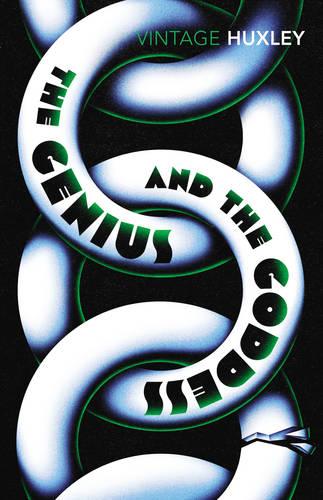
The Genius and the Goddess
paperback
Published:
3 September, 2015

Popular Books by Aldous Huxley
View All Books by Aldous Huxley








Description
More Details
| Type | Book |
|---|---|
| ISBN13 | 9781784870362 |
| ISBN10 | 1784870366 |
| Number Of Pages | 128 |
| Item Weight | 99 g |
| Product Dimensions | 130 x 198 x 8 mm |
| Publisher / Reseller | Vintage Publishing |
| Format | paperback |
Media Reviews
One of the twentieth century's greatest novelists * Daily Telegraph *
GoodReads Reviews
Author's Bio
Aldous Huxley was born on 26 July 1894 near Godalming, Surrey. He began writing poetry and short stories in his early 20s, but it was his first novel, Crome Yellow (1921), which established his literary reputation. This was swiftly followed by Antic Hay (1923), Those Barren Leaves (1925) and Point Counter Point (1928) – bright, brilliant satires in which Huxley wittily but ruthlessly passed judgement on the shortcomings of contemporary society. For most of the 1920s Huxley lived in Italy and an account of his experiences there can be found in Along the Road (1925). The great novels of ideas, including his most famous work Brave New World (published in 1932 this warned against the dehumanising aspects of scientific and material 'progress') and the pacifist novel Eyeless in Gaza (1936) were accompanied by a series of wise and brilliant essays, collected in volume form under titles such as Music at Night (1931) and Ends and Means (1937). In 1937, at the height of his fame, Huxley left Europe to live in California, working for a time as a screenwriter in Hollywood. As the West braced itself for war, Huxley came increasingly to believe that the key to solving the world's problems lay in changing the individual through mystical enlightenment. The exploration of the inner life through mysticism and hallucinogenic drugs was to dominate his work for the rest of his life. His beliefs found expression in both fiction (Time Must Have a Stop,1944, and Island, 1962) and non-fiction (The Perennial Philosophy, 1945; Grey Eminence, 1941; and the account of his first mescalin experience, The Doors of Perception, 1954. Huxley died in California on 22 November 1963.