The Critical Legal Studies Movement :Another Time, A Greater Task
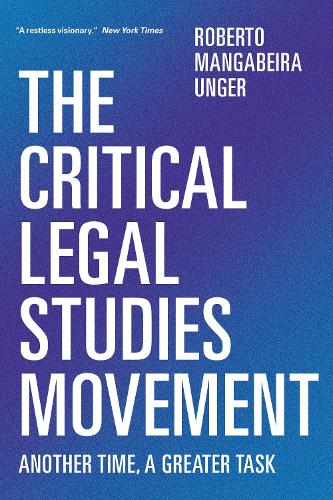
The Critical Legal Studies Movement :Another Time, A Greater Task
paperback
Published:
3 March, 2015

Popular Books by Roberto Mangabeira Unger
View All Books by Roberto Mangabeira Unger




Description
More Details
| Type | Book |
|---|---|
| ISBN13 | 9781781683392 |
| ISBN10 | 1781683395 |
| Number Of Pages | 224 |
| Item Weight | 286 g |
| Product Dimensions | 133 x 206 x 13 mm |
| Publisher / Reseller | Verso Books |
| Format | paperback |
Media Reviews
A restless visionary. * New York Times *
A philosophical mind out of the Third World turning the tables to become a synoptist and seer of the First. -- Perry Anderson
One of the few living philosophers whose thinking has the range of the great philosophers of the past. -- Lee Smolin * Times Higher Education Supplement *
Author's Bio
Roberto Mangabeira Unger is one of the leading philosophers and political thinkers in the world today. He is also active in Brazilian public life and has served twice as Brazil's Minister of Strategic Affairs, charged with developing initiatives that signal a direction for the country. Verso has published much of his work: in philosophy (The Religion of the Future), in social theory (False Necessity, Social Theory: Its Situation and Its Task, and Plasticity into Power), in political economy (The Knowledge Economy), and in legal theory (What Should Legal Analysis Become?).