When you buy a used copy YOU SAVE

1.02Kg of CO2

128 litre(s) of Water

0.0077 Tree(s)

1 book donated to global literacy projects
Northrop Flying Wings
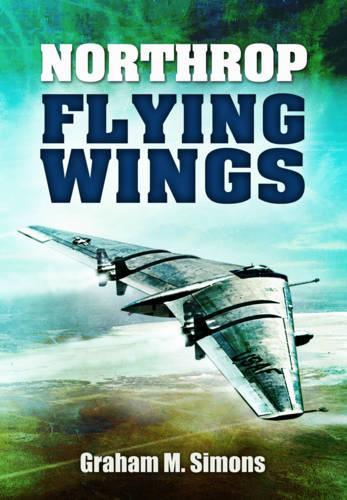
Northrop Flying Wings
hardback
Published:
1 July, 2013
hardback
Published:
1 July, 2013

Standard worldwide delivery by
Tue, July 14 - Fri, July 17
Order within
0

Description
Jack Northrop's flying wings - or to give them their more correct title, all wing aircraft - were some of the most spectacular, graceful and elegant flying machines ever to grace the skies. A design as aeronautically pure as a flying wing had huge advantages over conventional aircraft design. This advantage was that drag was reduced to an absolute minimum. As a result of this minimum drag, the performance of the flying wing became unequalled in speed, range and operating economy. For many years aeronautical designers realised that by reducing drag - that is the net aerodynamic force acting opposite to the direction of the movement of the solid object caused by the shape or form of an aircraft as it passes through the air - that machine's performance could be greatly increased. Early steps taken in this direction brought about the changes from biplane to monoplane design; the elimination of external wing struts and flying wires; the incorporation of retractable undercarriages and the general overall 'smoothing out' of the shape. However, in spite of all these advances, the average conventional aircraft of today still has two to four times the drag of a flying wing. So in order to reduce drag to its absolute minimum, a number of aircraft designers took the drastic step of eliminating both the fuselage and tail altogether and placed the pilot, the engines and the payload completely inside the wing envelope. These aircraft from Northrop, in particular the incredible eight-engined all-jet YB-49, were the purest form of flying machines - no fuselage, no tail - in fact barely any vertical surfaces at all. They seemed almost a fantasy, something from the realms of science fiction. For around forty years the history books recorded all of Northrop's all-wing aircraft as little more than an aberration, almost a failure, something that was an interesting dead-end that was investigated and found to be little more than aA--A-- byway to mainstream conventional aeronautics that suffered a highly publicised fatal crash and became embroiled in American politics. Then another design surfaced that equally captured the public imagination. It was from Northrop-Grumman, the successor company to the original designers and builders and it had exactly the same wingspan - this was the B-2 Spirit.
More Details
| Type | Book |
|---|---|
| ISBN13 | 9781781590362 |
| ISBN10 | 1781590362 |
| Number Of Pages | 256 |
| Item Weight | 1000 g |
| Publisher / Reseller | Pen & Sword Books Ltd |
| Format | hardback |
See More +
Media Reviews
This is an interesting account of the technical and political problems that beset the entry into service of B-35 and B-49. Few were built and the B-36 got the orders. -Bookshelf 'Graham Simons has done justice to a very complex but fascinating subject and the book is well illustrated with all manner of historical photographs' Jets
Author's Bio
Graham Simons is a highly respected aviation historian and author. He as many contacts within the aviation industry which has resulted into him accessing the many previously unpublished photographs within this book.