Music, Dance and the Archive - Indigenous Music, Language and Performing Arts
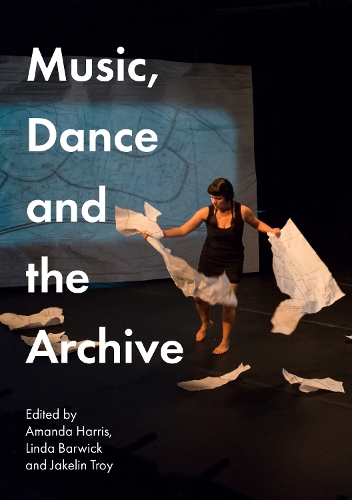
Music, Dance and the Archive - Indigenous Music, Language and Performing Arts
paperback
Published:
1 November, 2022

Popular Books by Amanda Harris
View All Books by Amanda Harris


Description
WINNER OF THE 2022 MANDER JONES AWARD
Music, Dance and the Archive reimagines records of performance cultures from the archive through collaborative and creative research. In this edited volume, Amanda Harris, Linda Barwick and Jakelin Troy bring together performing artists, cultural leaders and interdisciplinary scholars to highlight the limits of archival records of music and dance. Through artistic methods drawn from Indigenous methodologies, dance studies and song practices, the contributors explore modes of re-embodying archival records, renewing song practices, countering colonial narratives and re-presenting performance traditions. The book’s nine chapters are written by song and dance practitioners, curators, music and dance historians, anthropologists, linguists and musicologists, who explore music and dance by Indigenous people from the West, far north and southeast of the Australian continent, and from Aotearoa New Zealand, Taiwan and Turtle Island (North America).
Music, Dance and the Archive interrogates historical practices of access to archives by showing how Indigenous performing artists and community members and academic researchers (Indigenous and non-Indigenous) are collaborating to bring life to objects that have been stored in archives. It not only examines colonial archiving practices but also creative and provocative efforts to redefine the role of archives and to bring them into dialogue with contemporary creative work. Through varied contributions the book seeks to destabilise the very definition of “archives” and to imagine the different forms in which cultural knowledge can be held for current and future Indigenous stakeholders. Music, Dance and the Archive highlights the necessity of relationships, Country and creativity in practising song and dance, and in revitalising practices that have gone out of use.
More Details
| Type | Book |
|---|---|
| ISBN13 | 9781743328675 |
| ISBN10 | 1743328672 |
| Number Of Pages | 254 |
| Item Weight | 450 g |
| Product Dimensions | 176 x 250 x 14 mm |
| Publisher / Reseller | Sydney University Press |
| Format | paperback |
Media Reviews
“A radical and necessary intervention in our consideration of the archives and the records, and… a particularly genius approach to bringing the archives to life… This is the task for all of us - we must reanimate the archives, and this is the true decolonisation of the archives… To have the Traditional Owners take these elements of cultural heritage and bring them back to life in their own cultures, reanimating them, re-embodying them, and re-emplacing them in Country… This is the task – liberating the archives, re-embodying the archives.”
Professor Marcia Langton launching Music, Dance and the Archive, online, hosted by Indigenous Knowledge Institute, University of Melbourne, 1 December 2022
“The case study descriptions of working with Aboriginal community members on traditional music are fascinating and encouraging examples of working inclusively and developing archival knowledge in co-operation with traditional owners.
The questioning and examination of past practices of custodianship, arrangement, and description contribute considerably to decolonising the archives.”
– Judges’ comments, 2022 Mander Jones Awards
“Music, Dance, and the Archive offers new critical and innovative creative work with archival collections, and… the book carries forward our understandings of historical materials into new fascinating directions.”
– Brian Diettrich, Yearbook for Traditional Music 55 (Special Issue 2)
“A beautiful book that sings with energy and action, bringing to life those shadows of archived song, performance and collected cultural heritage of First Nations people around the world. Each contribution reveals with strength the aspects of performance, cultural maintenance and connection to culture beyond the fragments of the archive, but also notes the value in workshopping, responding and working with it. … The practices described in detail in this collection of projects ‘interrupt the record keeping of the archive, weaving past, present and future into connection and continuity’. It is a truly inspiring read!”
– Tiffany Shellam, Aboriginal History 47
Author's Bio
Amanda Harris is a Senior Research Fellow at Sydney Conservatorium of Music, University of Sydney and Director of the Sydney Unit of digital archive Pacific and Regional Archive for Digital Sources in Endangered Cultures (PARADISEC). Amanda is interested in hearing the voices of those often excluded from conventional music histories through collaborative research focused on gender and intercultural musical cultures. Her monograph Representing Australian Aboriginal Music and Dance 1930–70 was published by Bloomsbury Publishing in 2020.
Linda Barwick is a researcher and writer whose interests include nurturing creativity, honouring intergenerational wisdom and promoting diversity of thought and compassionate action. She enjoys gardening, bridge, grandchildren and cats, and is Emeritus Professor at Sydney Conservatorium of Music, University of Sydney, and a Fellow of the Australian Academy of the Humanities.
Jakelin Troy (Jaky) is Ngarigu of the Snowy Mountains, called by Jaky’s community Kunama Namadgi, in south-eastern Australia. She is Director, Indigenous Research at The University of Sydney and founded the Sydney Indigenous Research Network (https://bit.ly/3SpWQF1). Jaky is conducting research with Linda and Amanda into the use of historical records locked in the archives to support her own and other Aboriginal communities to recover and maintain language, cultural practices, performance and music. Recently she has been working with communities in north-west Pakistan to support their cultural activism as they document and share their language, music and performance.