Intervening Early in Psychosis :A Team Approach
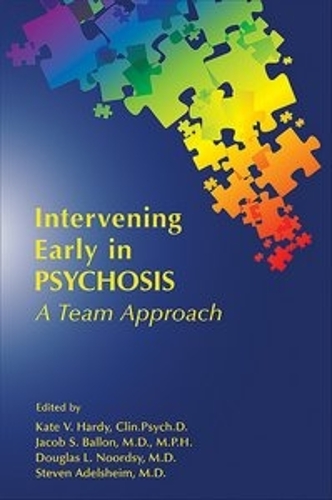
Intervening Early in Psychosis :A Team Approach
paperback
Published:
30 May, 2019

Popular Books by Kate Hardy
View All Books by Kate Hardy









Description
A growing body of both research and clinical experience confirms that intervening early in the progression of psychotic symptoms may delay or even prevent the movement toward more serious psychiatric illness. Young people at clinical high risk of developing psychosis, or those with a recent onset of psychosis, can benefit from a range of tailored interventions each emphasizing recovery and return to functioning.
Achieving recovery and remission for people experiencing psychosis requires a multifaceted, team-based response, and it is precisely this sort of a holistic approach Intervening Early in Psychosis: A Team Approach provides. With expert guidance on tailoring care to the needs of young people experiencing a first-episode psychosis, this book -- the first of its kind to focus on the U.S. health care environment -- begins with an overview of the history of early psychosis services in the United States and the development of coordinated specialty care (CSC) services.
Clinical case examples then illustrate the application of a range of evidence-based interventions, from the psychological and psychosocial -- including cognitive-behavioral therapy for psychosis and supported employment and education -- to peer, family, lifestyle, and technological interventions. All of these interventions are examined in individual detail, but it is the effectiveness of the interplay between them that the authors of Intervening Early in Psychosis emphasize. The collaboration of multidisciplinary stakeholders, including licensed therapists, medical providers, employment and education specialists, and peer specialists, is central to the success of the multimodal care model outlined in the guide and is examined at length.
This interdisciplinary approach is underpinned by recovery-oriented language that focuses on healing and recovery rather than disability and illness management. The book also provides an individual and family perspective on the lived experience of psychosis that underscores the importance of engaging clients and their support network in a philosophy of shared decision making.
With additional chapters that discuss advocacy issues and policy considerations when establishing CSC services and the importance of reducing the duration of untreated psychosis to optimize clinical and functional outcomes, this is the most comprehensive resource for clinicians, case workers, peer and vocational specialists, family members, and anyone else interested in expanding their knowledge of the early identification and treatment of individuals with psychotic disorders.
More Details
| Type | Book |
|---|---|
| ISBN13 | 9781615371754 |
| ISBN10 | 1615371753 |
| Number Of Pages | 459 |
| Item Weight | 757 g |
| Product Dimensions | 152 x 226 x 30 mm |
| Publisher / Reseller | American Psychiatric Association Publishing |
| Format | paperback |
Media Reviews
I have read various books that include a chapter or two on first-episode psychosis, but this is the first book that I have come across that covers so many of its facets. The chapters review specific topics in detail that is not found outside of this book. Those who have a particular interest in this topic will find this book helpful, but those who are not deeply involved with those with first episode psychosis will not require such a level of detail.
-- Aaron Plattner, M.D. * Doody Reviews *Author's Bio
Kate V. Hardy, Clin.Psych.D., Clinical Associate Professor, Department of Psychiatry and Behavioral Sciences, Stanford University School of Medicine, Stanford, California
Jacob S. Ballon, M.D., Clinical Associate Professor, Department of Psychiatry and Behavioral
Sciences, Stanford University School of Medicine, Stanford, California
Douglas L. Noordsy, M.D., Professor, Department of Psychiatry, Geisel School of Medicine at Dartmouth, and Clinical Professor, Department of Psychiatry and Behavioral Sciences, Stanford University School of Medicine, Stanford, California
Steven Adelsheim, M.D., Clinical Professor, Department of Psychiatry and Behavioral Sciences, Stanford University School of Medicine, Stanford, California.