Coyness and Crime in Restoration Comedy :Women's Desire, Deception, and Agency - Transits: Literature, Thought & Culture, 1650–1850
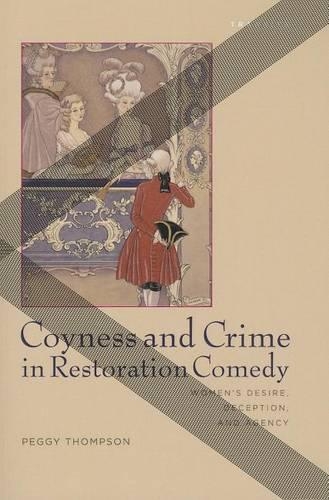
Coyness and Crime in Restoration Comedy :Women's Desire, Deception, and Agency - Transits: Literature, Thought & Culture, 1650–1850
paperback
Published:
18 October, 2013

Popular Books by Peggy Thompson
View All Books by Peggy Thompson
Description
Coyness and Crime in Restoration Comedy examines the extraordinary focus on coy women in late seventeenth-century English comedy. Plays by Etherege, Wycherley, Dryden, Behn, Shadwell, Congreve, Trotter, Southerne, Vanbrugh, and Pix—as well as much modern scholarship about them—taint almost all feminine modesty with intimations of duplicity and illicit desire that must be contained. Forceful responses by men, therefore, are implicitly exonerated, encouraged, and eroticized. In short, characters become “women” by performing coyness, only to be mocked and punished for it.
Peggy Thompson explores the disturbing dynamic of feminine coyness and masculine control as it interacts with reaffirmations of church and king, anxiety over new wealth, and emerging interests in liberty, novelty, and marriage in late seventeenth-century England. Despite the diversity of these contexts, the plays consistently reveal women caught in an ironic and nearly intractable convergence of objectification and culpability that allows them little innocent sexual agency. This is both the source and the legacy of coyness in Restoration comedy.
More Details
| Type | Book |
|---|---|
| ISBN13 | 9781611485516 |
| ISBN10 | 1611485517 |
| Number Of Pages | 202 |
| Item Weight | 318 g |
| Product Dimensions | 154 x 231 x 15 mm |
| Publisher / Reseller | Associated University Presses |
| Format | paperback |
Media Reviews
In allowing female actors to appear on stage, the Restoration may have marked a watershed moment in English theater history, but this did not mark a corresponding improvement in social attitudes toward women. As Thompson (Agnes Scott College) expertly documents, a wide range of late-17th-century comedies contested some as basic as a woman's right to say 'no' to persistent/unwelcome suitors. The author identifies what she terms the 'trope of insincere resistance,' a motif whereby a woman's 'no' actually means 'yes,' and female characters conceal insatiable desire behind masks of false modesty. After tracing the evolution of this pernicious trope through conduct literature of the period, Thompson charts how comic types and stock situations in drama reflected and reinforced gendered inequities in society. Chapters document that some of the era's best-loved dramatists--Wycherley, Dryden, Shadwell, Congreve, Southerne, Vanbrugh--wrote plays curtailing woman's sexual freedom and social options. Even Aphra Behn proves a traitor to her sex, depicting romantic love as mercenary self-interest, and affirming 'the prerogative of well-born men by implicitly blessing their sexual aggression in the face of women's denials.' Meticulously researched, clearly organized, methodically argued, this book strips the veils of elegance and wit from Restoration theater, exposing dismaying prurience, misogyny, and exploitation. Summing Up: Highly recommended. Graduate students, researchers. * Choice Reviews *
Peggy Thompson offers a new understanding of female sexual agency and female sexual consent on the Restoration stage. In Coyness and Crime in Restoration Comedy: Women’s Desire, Deception, and Agency, Thompson analyses what she terms ‘the trope of insincere resistance’, the product of a culture that forces women to refuse sexual acts they actively desire. Thompson’s book is compelling, and it convincingly enumerates the many ways in which women were forced to perform resistance and then mocked or punished for their supposed virtue. * The Year's Work In English Studies *
Author's Bio
Peggy Thompson has written on Restoration and eighteenth-century drama, fiction, and poetry. Her work has appeared in Studies in Philology; SEL: Studies in English Literature, 1500-1900; Restoration: Studies in Literary Culture, 1660-1700; Eighteenth-Century Fiction and elsewhere. She is the Ellen Douglass Leyburn Professor of English at Agnes Scott College.