Chemical Reactions :Stoichiometry and Beyond
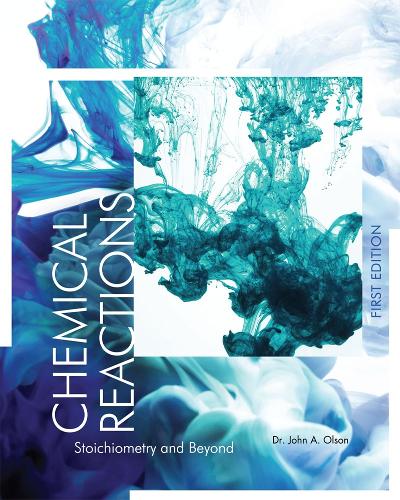
Chemical Reactions :Stoichiometry and Beyond
paperback
Published:
30 December, 2011
paperback
Published:
30 December, 2011

FREE Delivery by
Wed, July 29 - Thu, July 30
Order within
0
Description
In general chemistry the primary tool used to solve problems is the rote method, which can present some difficulties. Students are often plagued with poor recognition of new problems, and faculty in later courses are often disappointed that the students have forgotten what they were taught in the freshman year.
Chemical Reactions: Stoichiometry and Beyond tackles this issue in a new way by teaching students how all problems are solved. This innovative textbook presents a universal format to be used when solving all problems. Instead of memorization, students learn to ask three answerable questions, and by using the format, solve the problem. So, once the student masters how to use the format, they can solve any problem.
Designed to give students a powerful tool, this text is a breakthrough approach in teaching to help students apply and retain problem solving skills.
Chemical Reactions: Stoichiometry and Beyond tackles this issue in a new way by teaching students how all problems are solved. This innovative textbook presents a universal format to be used when solving all problems. Instead of memorization, students learn to ask three answerable questions, and by using the format, solve the problem. So, once the student masters how to use the format, they can solve any problem.
Designed to give students a powerful tool, this text is a breakthrough approach in teaching to help students apply and retain problem solving skills.
More Details
| Type | Book |
|---|---|
| ISBN13 | 9781609274269 |
| ISBN10 | 1609274261 |
| Number Of Pages | 170 |
| Item Weight | 525 g |
| Product Dimensions | 203 x 254 x 9 mm |
| Publisher / Reseller | Cognella, Inc |
| Format | paperback |
See More +
Author's Bio
John Olson did his graduate work at the University of Florida in the theoretical area, where he was a member of the Quantum Theory Project studying electron transfer reactions. As a post-doctoral fellow at Pennsylvania State University, his focus was electron transfer reactions at metal surfaces. Since joining the faculty of the Chemistry Department at Baylor University, Dr. Olson has taught undergraduate courses in general chemistry and physical chemistry, as well as graduate courses in quantum mechanics, thermodynamics, and statistical mechanics. His main teaching goal is to get students to think for themselves.