
1.34Kg of CO2

168 litre(s) of Water

0.0101 Tree(s)

1 book donated to global literacy projects
Music Theory for Computer Musicians
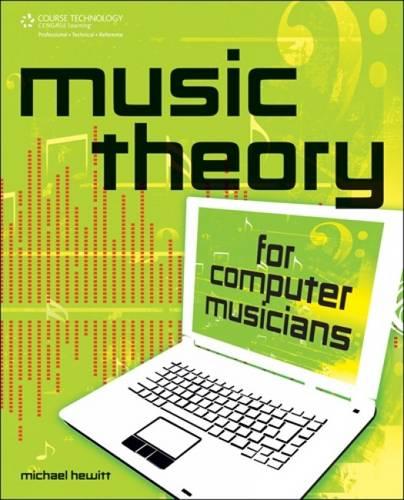
Music Theory for Computer Musicians
other
Published:
2 April, 2008


Popular Books by Michael Hewitt
View All Books by Michael Hewitt




Description
More Details
| Type | Book |
|---|---|
| ISBN13 | 9781598635034 |
| ISBN10 | 1598635034 |
| Number Of Pages | 336 |
| Item Weight | 706 g |
| Product Dimensions | 188 x 230 x 18 mm |
| Publisher / Reseller | Cengage Learning, Inc |
| Format | other |
| Edition | New edition |
Media Reviews
Introduction Chapter 1: Musical Sound Chapter 2: The Notes Chapter 3: The Major Scale Chapter 4: Rhythm, Tempo and Note Lengths Chapter 5: Score Editing Chapter 6: Intervals Chapter 7: Meter Chapter 8: Chords Chapter 9: The Natural Minor Scale Chapter 10: Melody and Motives Chapter 11: The Harmonic and Melodic Minor Scales Chapter 12: Augmented and Diminished Intervals and Interval Inversions Chapter 13: Chordal Inversions, Octave Doubling, and Spacing Chapter 14: Additive Rhythms Chapter 15: Expanding Your Knowledge of Keys Chapter 16: the Pentatonic Scale Chapter 17: Major, Minor, Augmented, and Diminished Triads Chapter 18: Chord Progressions and Root Movement Chapter 19: The Cycle of Fifths Chapter 20: The Seven Diatonic Modes Chapter 21: Chords of the Seventh Chapter 22: Exotic Scales Chapter 23: Complex Harmony Chapter 24: Arpeggiation Chapter 25: Intonation Chapter 26: Conclusion Appendix A: Scales Appendix B: Audio CD and Accompanying Text Sidebars
Author's Bio
Dr. Michael Hewitt was born in South Wales in the United Kingdom. He earned his bachelor of music degree at London University and a master's degree and doctorate at the University of Bangor, where he specialized in musical composition. He is a classically trained musician, a composer, a lecturer, and an author on musical subjects. Working to commission, he writes classical scores as well as soundtracks for various television productions, both at home and abroad. He is currently working as a music technology tutor at Coleg Harlech, North Wales.