Swarm Intelligence - The Morgan Kaufmann Series in Artificial Intelligence
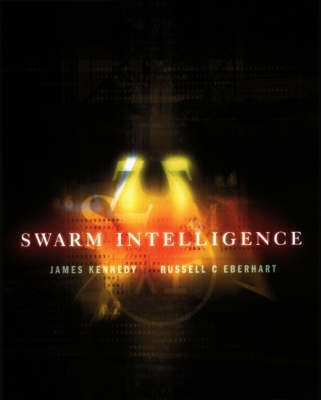
Swarm Intelligence - The Morgan Kaufmann Series in Artificial Intelligence
hardback
Published:
11 April, 2001

Popular Books by Yuhui Shi
View All Books by Yuhui Shi




Description
More Details
| Type | Book |
|---|---|
| ISBN13 | 9781558605954 |
| ISBN10 | 1558605959 |
| Number Of Pages | 544 |
| Item Weight | 1050 g |
| Publisher / Reseller | Elsevier Science & Technology |
| Format | hardback |
Media Reviews
"Well received the September UK Game industry show." --Recent publicity includes a mention in Visual Basic Design Magazine, June issue.
Author's Bio
Russ Eberhart is Associate Dean of Research at Purdue School of Engineering and Technology in Indianapolis, IN. He is the author of Neural Network PC Tools (Academic Press), a leading book in the field of Neural Networks. Among his credits, he is the former President of the IEEE Neural Networks Council. Yuhui Shi received the Ph.D. degree in electrical engineering from Southeast University, China, in 1992. Since then, he has worked at several universities including the Department of Radio Engineering, Southeast University, Nanjing, China, the Department of Electrical & Computer Engineering, Concordia University, Montreal, Canada, the Department of Computer Science, Australian Defense Force Academic, Canberra, Australia, the Department of Computer Science, Korean Advanced Institute of Science and Technology, Taejon, Korea, and the Department of Electrical Engineering, Purdue School of Engineering and Technology, Indianapolis, Indiana, USA. He is currently with Electronic Data Systems, Inc., Kokomo, Indiana, USA, as an Applied Specialist. His main interests include artificial neural networks, evolutionary computation, fuzzy logic systems and their industrial applications. Dr. Shi was a co-presenter of the tutorial, Introduction to Computation Intelligence, at the 1998 WCCI Conference, Anchorage, Alaska, and presented the tutorial, Evolutionary Computation and Fuzzy Systems, at the 1998 ANNIE Conference, St. Louis. He is the technical co-chair of 2001 Particle Swarm Optimization Workshop, Indianapolis, Indiana. James Kennedy is a social psychologist who works in survey methods at the US Department of Labor. He has conducted basic and applied research into social effects on cognition and attitude. Dr. Kennedy has worked with the particle swarm computer model of social influence in artificial communities since 1994, presenting research in both the computer-science and social-science publications.