The City as Power :Urban Space, Place, and National Identity
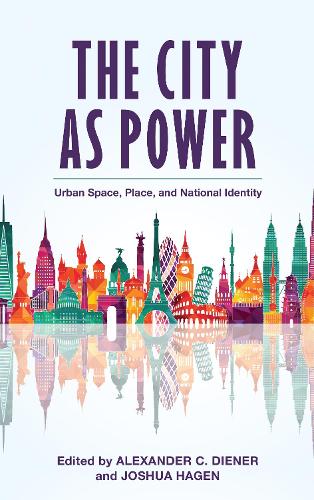
The City as Power :Urban Space, Place, and National Identity
hardback
Published:
18 September, 2018

Popular Books by Alexander C. Diener
View All Books by Alexander C. Diener

Description
This interdisciplinary book considers national identity through the lens of urban spaces.
By bringing together scholars from a range of disciplines, The City as Power provides broad comparative perspectives about the critical importance of urban landscapes as forums for creating, maintaining, and contesting identity and belonging. Rather than serving as passive backdrops, urban spaces and places are active mediums for defining categories of inclusion—and exclusion. With an international scope and ready appeal to visual learners, the book offers a compelling survey of historical and contemporary efforts to enact state ideals, express counter-narratives, and negotiate global trends in cities. The contributors show how successive regimes reshape cityscapes to mirror their respective socio-political agendas, perspectives on history, and assumptions of power. Yet they must do so within the legal, ethnic, religious, social, economic, and cultural geographies inherited from previous regimes. Exploring the rich diversity of urban space, place, and national identity, the book compares core elements of identity projects in a range of political, cultural, and socioeconomic settings. By focusing on the built form and urban settings for social movements, protest, and even organized violence, this timely book demonstrates that cities are not simply lived in but also lived through.
More Details
| Type | Book |
|---|---|
| ISBN13 | 9781538118252 |
| ISBN10 | 1538118254 |
| Number Of Pages | 328 |
| Item Weight | 567 g |
| Product Dimensions | 160 x 235 x 23 mm |
| Publisher / Reseller | Bloomsbury Publishing Plc |
| Format | hardback |
Media Reviews
Diener and Hagen have assembled a talented cast of scholars to investigate a wide range of urban landscapes, national ideologies, and political struggles from across the globe—from the everyday performance of car culture in the UAE to highly charged #BlackLivesMatter protests in the United States. In particular, The City as Power makes a major contribution to the recent ‘memory turn’ in the social sciences and humanities. The volume demonstrates the ways in which urban space is a vehicle for narrating and debating what histories and whose identities matter or belong in the contemporary nation. -- Derek Alderman, University of Tennessee Knoxville
Alexander Diener and Joshua Hagen are to be congratulated for assembling such a far-reaching array of examples to reveal how the constructed and contested geographies of nationalism play out at multiple scales of the built environment. Taken together, these show how a sense of collective belonging is forged and re-forged through political landscapes. Drawing on incisive cases from across the globe, this astute book shows how a conjoined design-politics works to selectively edit, negotiate, and reappropriate the useable past to situate a powerful and politically useful future. -- Lawrence J. Vale, MIT, author of Architecture, Power, and National Identity
This exhilarating volume examines a range of topical issues across urban landscapes, spanning and extending diverse geographies at different scales and making productive connections across time, space, and culture. The essays model an integrative approach to urban studies that is satisfyingly site-specific and also thoughtfully shaped by broader comparative perspectives. Diener and Hagen convincingly demonstrate the critical relevance and potential of ‘nation,’ ‘narration,’ ‘identity,’ and ‘power’ as analytical concepts for cities in the twenty-first century. -- Julie Buckler, Harvard University
Despite the pivotal role cities play in forming the collective consciousness of a nation, they do not immediately figure in our notions of national identity. Alexander C. Diener and Joshua Hagen’s The City as Power: Urban Space, Place andNational Identity makes these connections explicit by revealing how urban space and place are integral to the construction, negotiation, and contestation of national identity. . . . [The book offers]rich and concise case studies of cities from the Global North and Global South. . . . Diener and Hagen’s analogy of the city as a palimpsest is particularly intriguing to cultural geographers since it ‘speaks to multiple visions and impacts of different culture.’ . . [demonstrating] how a conceptual vocabulary that is familiar to cultural geographers can be extended to the study of the city. * Journal of Cultural Geography *
Diener and Hagen have assembled an impressive range of salient examples at the nexus of the ‘memory turn’ and the study of identity and social movements, each demonstrating the centrality of urban space to processes of social exclusion and ethnonationalism. These are broad, topical themes that continue to be of critical relevance to the field of geography. Bringing together postcolonial perspectives, incisive explorations of scale and the built environment, and astute interrogations of the proliferation of ethnic and national identities and their roles in mobilizing ideals of citizenship in the twenty-first century, The City as Power offers a compelling volume that explores how urban space is used in contemporary contexts to ‘delineate citizens and foreigners, insiders and outsiders, those who belong and those who do not’. . . . The City as Power introduces us to a multitude of Ozymandiases—toppled monuments to past kings of kings—and reminds us that critical interdisciplinary work awaits where new environmental aesthetics encounter intractable political logics of power and urban space. * Historical Geography *
Author's Bio
Alexander C. Diener is associate professor of geography at the University of Kansas.
Joshua Hagen is dean of the College of Letters and Science at the University of Wisconsin-Stevens Point.