Why Brains Need Friends :The neuroscience of social connection - and why we all need more
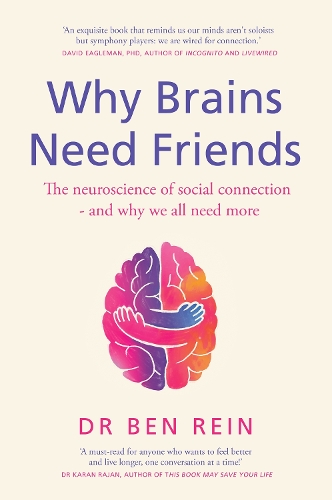
Why Brains Need Friends :The neuroscience of social connection - and why we all need more
hardback
Published:
1 January, 2026

Description
'An exquisite book that reminds us our minds aren't soloists but symphony players: we are wired for connection.'."-David Eagleman, PhD, author of Incognito and Livewired
'A must-read for anyone who wants to feel better and live longer, one conversation at a time!' - Dr. Karan Rajan, author of This Book May Save Your Life
From your morning coffee order, to weaving through passengers on the train, sitting through tense work meetings, riding in a packed elevator, attending a happy hour with colleagues, or relaxing on the couch with family, every day is filled with social interactions that nurture and support your brain's health. Whether mundane or extraordinary, they collectively make up the 'social diet' that you feed your brain, that influences your well-being, shapes your experience, and, done right, even lengthens your life.
In an age of isolation, WHY BRAINS NEED FRIENDS is a neuroscience-backed guide to social interactions, drawing insights from the world of science to help you understand the biology behind your relationships, reconsider the value of companionship, and build a healthier, happier, and more connected life. It's not just what you feed your brain that matters - it's who.
More Details
| Type | Book |
|---|---|
| ISBN13 | 9781529438611 |
| ISBN10 | 1529438616 |
| Number Of Pages | 256 |
| Item Weight | 447 g |
| Product Dimensions | 156 x 236 x 30 mm |
| Publisher / Reseller | Quercus Publishing |
| Format | hardback |
Media Reviews
An exquisite book that reminds us our minds aren't soloists but symphony players: we are wired for connection. -- David Eagleman, PhD, author of Incognito and Livewired
A friendly exploration of the psychology and neuroscience of why we are better together. -- Lisa Genova, PhD, author of Still Alice and Remember
A must-read for anyone who wants to feel better and live longer, one conversation at a time! -- Dr. Karan Rajan, author of This Book May Save Your Life
Read this because it will make you better understand yourself. But read it too because it will help you navigate our very human path across the complicated social web of our life on Earth. -- Deborah Blum, author of The Poisoner’s Handbook
This book is a beautiful example of Rein doing what he does best: making science clear, interpretable, and meaningful for everyone. -- Robert Malenka, MD, PhD, Deputy Director, Stanford University Wu Tsai Neurosciences Institute
Why Brains Need Friends may be just the antidote our increasingly disconnected world needs. We all want to live well longer-this promises to be one of the most important books you will read to achieve that goal -- Sandra Bond Chapman, PhD, Chief Director of the Center for BrainHealth, UT Dallas
Author's Bio
Ben Rein, PhD is a neuroscientist at Stanford University and a renowned science communicator. Dr. Rein has spent over a decade studying the neuroscience of social interactions, uncovering new information about the genetic basis of autism spectrum disorder, how connections between brain cells regulate social behaviour, and how the psychoactive drug MDMA enhances empathy and connectedness between individuals.
Outside of the lab, Dr. Rein educates an audience of more than 900,000 social media followers about neuroscience. His videos have been featured on Good Morning America and ABC News among other major media outlets. Dr. Rein leads science communication workshops at multiple universities including Johns Hopkins University, Stanford University, UT Dallas, and the University of Minnesota, and his public messaging has been recognized with awards from the Society for Neuroscience, the American Association for the Advancement
of Science (AAAS) and Stanford University.