The Germans in India :Elite European Migrants in the British Empire - Studies in Imperialism
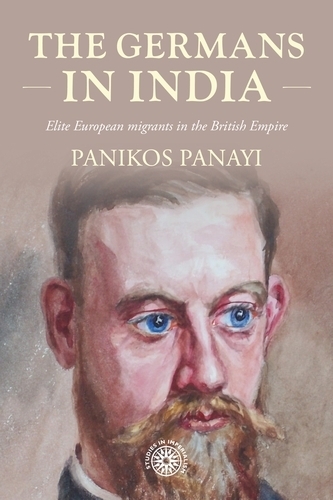
The Germans in India :Elite European Migrants in the British Empire - Studies in Imperialism
paperback
Published:
3 June, 2025

Popular Books by Panikos Panayi
View All Books by Panikos Panayi





Description
More Details
| Type | Book |
|---|---|
| ISBN13 | 9781526191243 |
| ISBN10 | 1526191245 |
| Number Of Pages | 312 |
| Item Weight | 434 g |
| Product Dimensions | 156 x 234 x 16 mm |
| Publisher / Reseller | Manchester University Press |
| Format | paperback |
Media Reviews
‘The intellectual and personal histories of German refugees and internment camps reveal a fascinating history of exile, suffering, and trauma that is simultaneously marked by resilience, survival, and creativity. It is here that the role of subaltern memories and archives can and should be brought into conversation with the current narrative, as the elites and subaltern were also put together in the internment camps. While marginal, subaltern actors play an important role. Although not enshrined in archives, they too shape histories in ways that need to be mapped when we are writing histories of entanglements and globalization. Indeed, subalterns are the first actors who migrate under the pulls and pressures of globalization as migrant labour and refugees. In fact, the rich archival material and Panayi’s meticulous research direct our attention to such possibilities. In conclusion, Panayi’s Germans in India is a valuable addition to our existing knowledge of connected Indo-German histories even as it suggests new avenues to explore.’
Razak Khan, German Historical Institute London Bulletin Vol. XL, No. 2, Nov 2018
‘In six chapters Panayi weaves a complex narrative of the histories of highly educated elite actors, most notably missionaries, travellers, and scholars. He uses rich archival material gleaned from institutional missionary and colonial state archives as well as personal accounts left in the form of autobiographies, travel documents, memoirs, and other ego documents…The intellectual and personal histories of German refugees and internment camps reveal a fascinating history of exile, suffering, and trauma that is simultaneously marked by resilience, survival, and creativity.’
Razak Khan, German Historical Institute London Bulletin, Vol XL (2018), 2
Author's Bio
Panikos Panayi is Professor of European History at De Montfort University