Shakespeare's Resources
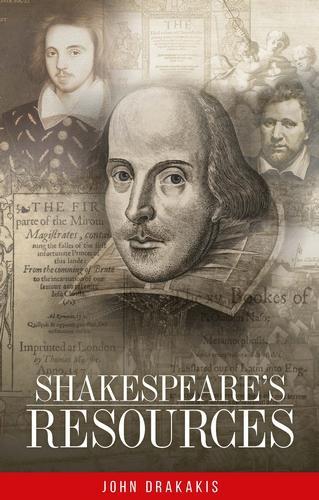
Shakespeare's Resources
hardback
Published:
23 November, 2021

Popular Books by John Drakakis
View All Books by John Drakakis

Description
More Details
| Type | Book |
|---|---|
| ISBN13 | 9781526157867 |
| ISBN10 | 1526157861 |
| Number Of Pages | 400 |
| Item Weight | 1000 g |
| Product Dimensions | 138 x 216 x 22 mm |
| Publisher / Reseller | Manchester University Press |
| Format | hardback |
Media Reviews
'Drakakis finds the idea of ‘source’ or ‘authority’ too narrow. The sheer scope of materials to which Shakespeare had access, the the circumstances in which the playwright utilized them, he argues, mean that ‘source’ and ‘authority’ imply a ‘quasi-theological’ concept of creation. Instead of ‘source’ or ‘authority’, Drakakis offers ‘resources’, a term that, as he uses it, is much more open-ended. A resource could be a book, but it could also be a half-forgotten encounter or, in Shakespeare’s case, the experience of having written an earlier play ... Each of his chapters is deeply engaged with the history of Shakespeare scholarship, on which he commentates with generosity and from which he quotes at length ... He closes on a musical metaphor, presenting Shakespeare as one who could ‘repeat tunes, recall motifs to mind, imitate themes and memes, improvise on existing material and, on a number of occasions, innovate’.
Times Literary Supplement
Times Literary Supplement
Author's Bio
John Drakakis is Emeritus Professor of English Studies at the University of Stirling