Breaking Peace :Brexit and Northern Ireland - Manchester University Press
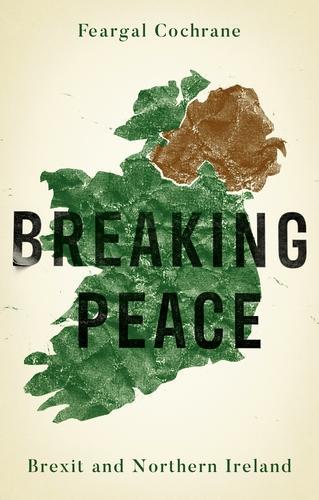
Breaking Peace :Brexit and Northern Ireland - Manchester University Press
hardback
Published:
17 September, 2020

Popular Books by Feargal Cochrane
View All Books by Feargal Cochrane
Description
In 2021, Northern Ireland will commemorate its centenary, but Brexit, more than any other event in that 100-year history, has jeopardised its very existence. Events since 2016 have complicated political relationships within Northern Ireland and further destabilised the devolved institutions established in the wake of the 1998 Good Friday Agreement.
Feargal Cochrane’s urgent analysis argues that Brexit is breaking peace in Northern Ireland, making it the most significant event since Partition. Endless negotiations and uncertainty have brought contested identities back to the forefront of political debate. Always so much more than a line on a map, the border has become an existential marker of identity as well as a reminder of the dark days of violent conflict.
This insightful book explores how and why the Brexit negotiations have been so destabilising for politics in Northern Ireland, opening the door to a violent past.
More Details
| Type | Book |
|---|---|
| ISBN13 | 9781526142559 |
| ISBN10 | 1526142554 |
| Number Of Pages | 296 |
| Item Weight | 1000 g |
| Publisher / Reseller | Manchester University Press |
| Format | hardback |
Media Reviews
'Elegantly written and forceful. ... This book will be of significant value to anyone who wishes to retrace the dynamics of this controversy.’
Paul Bew, Professor of Irish Politics, Queen’s University Belfast
‘Continued peace and progress on the island of Ireland always was the Achilles heel of Brexit and this masterful insight shows why.’
Lord Peter Hain, former Secretary of State for Northern Ireland
‘Breaking Peace is a definitive work. Accessible and authoritative, it is the most important analysis yet of how Brexit destabilised both Northern Ireland and Anglo-Irish relations. Feargal Cochrane’s masterly book explains how the UK’s vote to leave the EU reinvigorated the long-standing question of Northern Ireland’s constitutional question, as its border dominated all things Brexit. The book provides a comprehensive account of how and why Northern Ireland’s Democratic Unionist Party backed Brexit, yet ultimately came to be left behind by a Brexiteer British Government. Drawing upon a wide range of sources, Breaking Peace is a must-read for any scholar interested in the recent politics of the UK and Ireland.’
Jon Tonge, Professor of Politics, University of Liverpool
'This book is a reliable, necessary record of an extraordinary period in British and Irish history. Cochrane captures the existential shock of Brexit for Northern Ireland, as well as carefully explaining why this was so. His scholarly knowledge of, and empathy towards, Northern Ireland has produced a powerful and compelling read.'
Katy Hayward, Senior Fellow, UK in a Changing Europe and Queen’s University Belfast
‘Informed by evidence, forensic in its analysis, and loaded with nuance and insight, Feargal Cochrane’s Breaking Peace explains in compelling detail how Brexit has challenged Northern Ireland’s fragile and delicate political equilibrium. The triumph of this book lies not just in the telling of this story, but in revealing how Northern Ireland’s future political stability can be protected as Brexit enters its next phase.’
Mary C. Murphy, Jean Monnet Chair in European Integration, University College Cork
'This book will remain a vital resource for understanding how we arrived at a very badly damaged peace.'
Irish Political Studies
GoodReads Reviews
Author's Bio
Feargal Cochrane was Professor of International Conflict Analysis at the University of Kent and Director of the Conflict Analysis Research Centre (CARC) within the School of Politics and International Relations from 2012-19. He is now a Senior Research Fellow of CARC and Emeritus Professor.