Justice and Mercy :Moral Theology and the Exercise of Law in Twelfth-Century England - Artes Liberales
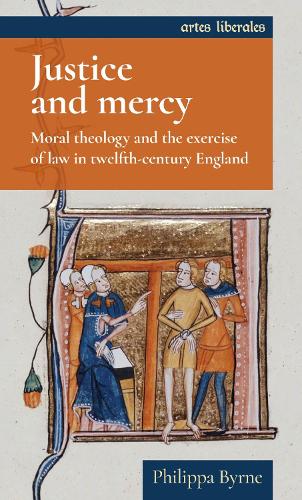
Justice and Mercy :Moral Theology and the Exercise of Law in Twelfth-Century England - Artes Liberales
hardback
Published:
6 November, 2018

Popular Books by Philippa Byrne
View All Books by Philippa Byrne

Description
More Details
| Type | Book |
|---|---|
| ISBN13 | 9781526125347 |
| ISBN10 | 152612534X |
| Number Of Pages | 304 |
| Item Weight | 535 g |
| Product Dimensions | 138 x 216 x 21 mm |
| Publisher / Reseller | Manchester University Press |
| Format | hardback |
Media Reviews
‘Justice and Mercy is a remarkable book…the book resounds with the historiographic traditions and conflicts among the different schools of legal history and of intellectual history, both in Britain and on the continent. While the author is obviously well aware of them, she manages to avoid the pitfalls of adding to these ongoing conflicts.’
Esther Cohen, Hebrew University of Jerusalem, The Medieval Review
'I dearly wish this excellent book had been available twenty years ago when I was writing one of my own on the changing ways that the human urge to vengeance were expressed c. 1000–1300. Philippa Byrne, a first-time author, has assembled an amazing amount of difficult theological material, much direct from manuscript, to make a persuasive and novel case that judges had to include in their sentencing policy what she calls “reciprocal mercy,” a kind of subset of “deliberative” justice, generated in the schools by “a sophisticated and long-running debate about judicial ethics”. [...] This is an enviably able, solid, fresh, and exciting first book that will give all kinds of readers much to think about.'
Paul R. Hyams, Speculum
Author's Bio
Philippa Byrne is Lecturer in Medieval History at the University of Oxford