Global Impact of Unconventional Energy Resources
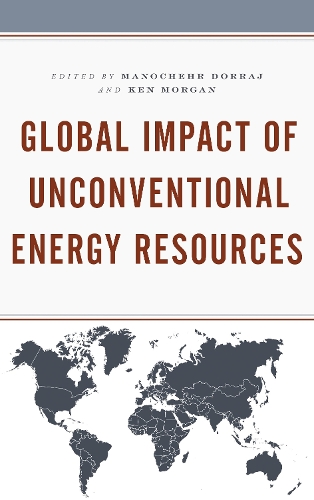
Global Impact of Unconventional Energy Resources
paperback
Published:
11 June, 2021

Popular Books by Manochehr Dorraj
View All Books by Manochehr Dorraj

Description
More Details
| Type | Book |
|---|---|
| ISBN13 | 9781498566094 |
| ISBN10 | 149856609X |
| Number Of Pages | 316 |
| Item Weight | 503 g |
| Product Dimensions | 154 x 218 x 20 mm |
| Publisher / Reseller | Bloomsbury Publishing Plc |
| Format | paperback |
Media Reviews
The “unconventional” energy resources in the title of this collection are shale oil and gas. The volume's 16 contributors are a mix of social scientists, geologists, engineers, and economists based in universities, research institutes, government agencies, and energy management and capital investment firms. This eclecticism of backgrounds affords panoramic, extensively detailed descriptions of the technical, legal, and logistical hurdles future fossil energy extraction faces in regions such as the Middle East, Russia, Africa, Europe, Australia, and the US. . . Most contributors focus on the economic viability of shale exploitation; only the penultimate chapter by Michael Slattery explores, with analytical detachment, the environmental and public acceptability dimensions of unconventional sources. . . useful graphics and tables are provided.
Summing Up: Recommended. Advanced undergraduates and above.
As humankind figures out how to provide energy in a sustainable way for the Earth’s growing population in the future, the story of unconventional energy—specifically, how these resources came about, and what their arrival means for all of us—will figure prominently in our discussions and planning about what to do next. Dorraj and Morgan are the perfect choice to tell this story via the many and varied contributions captured in this book. This makes a valuable contribution to this important topic. -- Robert K. Perrons, Queensland University of Technology
Unconventional oil and gas resources are contributing a growing share to the world’s fossil fuel supply, and will continue to do so for a while, despite the growth of low carbon energy. Ken Morgan and Manochehr Dorraj have performed a valuable task by assembling a group of specialists to provide insightful accounts of the most important of these resources. The analyses cover a range of historical, technological, commercial and regulatory issues, and provide the reader with a solid understanding of this important source of energy. -- Philip Andrews-Speed, National University of Singapore
Author's Bio
Manochehr Dorraj is professor of political science at Texas Christian University.
Ken Morgan is director of the Energy Institute at Texas Christian University.