Honduras in Dangerous Times :Resistance and Resilience
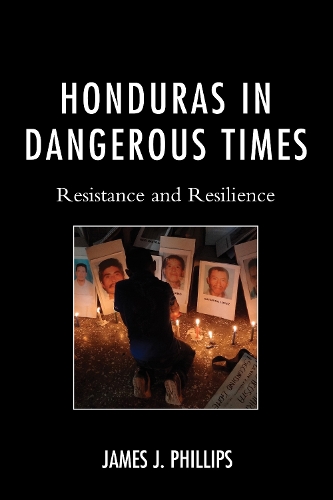
Honduras in Dangerous Times :Resistance and Resilience
paperback
Published:
19 May, 2017

Popular Books by James J. Phillips
View All Books by James J. Phillips
Description
More Details
| Type | Book |
|---|---|
| ISBN13 | 9781498529471 |
| ISBN10 | 149852947X |
| Number Of Pages | 290 |
| Item Weight | 431 g |
| Product Dimensions | 151 x 227 x 21 mm |
| Publisher / Reseller | Bloomsbury Publishing Plc |
| Format | paperback |
Media Reviews
Honduras did not receive much media attention until a 2009 military coup removed Manuel Zelaya’s elected government from power. Since then, the Central American country has been firmly at the forefront of Latin American activist and academic attention. Strong and well-organized popular resistance to the coup altered how many outside observers thought about the country. The resilience of this resistance, however, came as no surprise to anthropologist Phillips, who has accompanied social movements in that country for more than 40 years. In this important and compelling book, Phillips documents a range of Indigenous, religious, cultural, legal, and political forms of resistance to long-standing patterns of exploitation and domination. A final chapter examines US governmental intervention in Honduras, and international people-to-people solidarity movements that counter political and economic interference in the country’s internal affairs. . . .Summing Up: Recommended. All levels/libraries. * Choice Reviews *
After the 2009 coup d’état in Honduras, the massive oppositional movement that emerged surprised almost everyone. Working with four decades of experience in the country, James Phillips masterfully documents the cultures of resilience and resistance behind the struggle. This book is essential reading for understanding contemporary Central America. -- Mark Anderson, University of California, Santa Cruz
Written with clarity and grace, Honduras in Dangerous Times does a beautiful job of evoking and analyzing social movements in modern Honduras. Phillips takes us deep into the Resistance movement that exploded in response to the 2009 coup, and its back story as well, with an especially rich understanding of the role of religion. At the same time he is able to pull back to larger theoretical questions in an accessible and compelling manner. -- Dana L. Frank, University of California, Santa Cruz
Author's Bio
James Phillips is adjunct assistant professor of anthropology and international studies at Southern Oregon University.