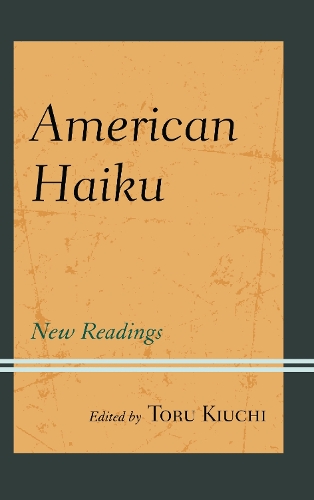
American Haiku :New Readings
American Haiku :New Readings
hardback
Published:
30 November, 2017
hardback
Published:
30 November, 2017

Standard worldwide delivery by
Tue, July 7 - Fri, July 10
Order within
0
Popular Books by Randy Brooks
View All Books by Randy Brooks
Description
American Haiku: New Readings explores the history and development of haiku by American writers, examining individual writers. In the late nineteenth century, Japanese poetry influenced through translation the French Symbolist poets, from whom British and American Imagist poets, Amy Lowell, Ezra Pound, T. E. Hulme, and John Gould Fletcher, received stimulus. Since the first English-language hokku (haiku) written by Yone Noguchi in 1903, one of the Imagist poet Ezra Pound’s well-known haiku-like poem, “In A Station of the Metro,” published in 1913, is most influential on other Imagist and later American haiku poets. Since the end of World War II many Americans and Canadians tried their hands at writing haiku. Among them, Richard Wright wrote over four thousand haiku in the final eighteen months of his life in exile in France. His Haiku: This Other World, ed. Yoshinobu Hakutani and Robert L. Tener (1998), is a posthumous collection of 817 haiku Wright himself had selected. Jack Kerouac, a well-known American novelist like Richard Wright, also wrote numerous haiku. Kerouac’s Book of Haikus, ed. Regina Weinreich (Penguin, 2003), collects 667 haiku. In recent decades, many other American writers have written haiku: Lenard Moore, Sonia Sanchez, James A. Emanuel, Burnell Lippy, and Cid Corman. Sonia Sanchez has two collections of haiku: Like the Singing Coming off the Drums (Boston: Beacon Press, 1998) and Morning Haiku (Boston: Beacon Press, 2010). James A. Emanuel’s Jazz from the Haiku King (Broadside Press, 1999) is also a unique collection of haiku. Lenard Moore, author of his haiku collections The Open Eye (1985), has been writing and publishing haiku for over 20 years and became the first African American to be elected as President of the Haiku Society of America. Burnell Lippy’s haiku appears in the major American haiku journals, Where the River Goes: The Nature Tradition in English-Language Haiku (2013).Cid Corman is well-known not only as a haiku poet but a translator of Japanese ancient and modern haiku poets: Santoka, Walking into the Wind (Cadmus Editions, 1994).
More Details
| Type | Book |
|---|---|
| ISBN13 | 9781498527170 |
| ISBN10 | 1498527175 |
| Number Of Pages | 356 |
| Item Weight | 640 g |
| Product Dimensions | 157 x 241 x 29 mm |
| Publisher / Reseller | Bloomsbury Publishing Plc |
| Format | hardback |
See More +
Media Reviews
A deep, exciting plunge into the frog pond of English language haiku. Professor Kiuchi gathers into one, must-read volume a comprehensive history of haiku in English, particularly of American haiku, along with penetrating analyses by top scholars in the field. The origin story of American haiku has never before been told in such dazzling detail. -- David G. Lanoue, Xavier University
GoodReads Reviews
Author's Bio
Toru Kiuchi is professor of English at Nihon University.