High Voltage :Hydroelectric Development and Political Power in Peru
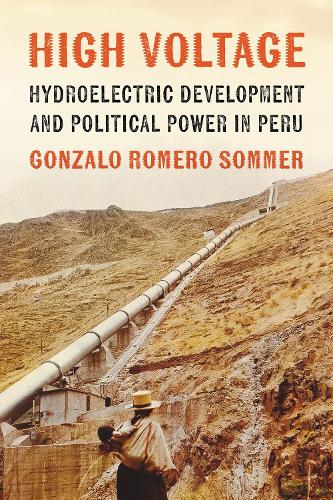
High Voltage :Hydroelectric Development and Political Power in Peru
hardback
Published:
1 December, 2025
hardback
Published:
1 December, 2025

Standard worldwide delivery by
Thu, July 9 - Tue, July 14
Order within
0
Condition:
NEW
$66.08
RRP
$68.56
You save $2.48 (4%)
Available
1
in stock
FREE Returns within 30 days
Description
Beginning in the early nineteenth century, Peru sought to advance its national progress through the development of infrastructure, especially through the economic and social potential of hydroelectricity. However, decades of modernization efforts by the Peruvian state failed to deliver national social integration or political stability.
In High Voltage Gonzalo Romero Sommer examines Peru’s political history through its efforts at hydroelectrification as part of state formation in the central Andes, from the beginning of the twentieth century through the Cold War. Intellectuals, scientists, and statesmen advocated electricity-led development as a possibility for dismantling traditional social and geographic hierarchies, but they also wielded hydroelectric development as an opportunity for strengthening what may be fairly called “colonial” economic and political structures. By the end of the twentieth century, the electrical grid physically unified parts of the country and simultaneously highlighted critical divisions in Peru’s fragmented society and political class. In this first comprehensive study of modern Peru’s electrification process, Romero Sommer provides a new perspective on Peruvian state formation by examining how the central state engaged with rural communities through electrification, contributing to a larger global debate about electricity, power, and the political uses of infrastructure.
In High Voltage Gonzalo Romero Sommer examines Peru’s political history through its efforts at hydroelectrification as part of state formation in the central Andes, from the beginning of the twentieth century through the Cold War. Intellectuals, scientists, and statesmen advocated electricity-led development as a possibility for dismantling traditional social and geographic hierarchies, but they also wielded hydroelectric development as an opportunity for strengthening what may be fairly called “colonial” economic and political structures. By the end of the twentieth century, the electrical grid physically unified parts of the country and simultaneously highlighted critical divisions in Peru’s fragmented society and political class. In this first comprehensive study of modern Peru’s electrification process, Romero Sommer provides a new perspective on Peruvian state formation by examining how the central state engaged with rural communities through electrification, contributing to a larger global debate about electricity, power, and the political uses of infrastructure.
More Details
| Type | Book |
|---|---|
| ISBN13 | 9781496235121 |
| ISBN10 | 1496235126 |
| Number Of Pages | 298 |
| Item Weight | 1000 g |
| Publisher / Reseller | University of Nebraska Press |
| Format | hardback |
See More +
Media Reviews
“This is the first serious scholarly study on electrification in the Andes and will be welcomed by historians of Peru and Latin Americanists more broadly. Its questions about modernization, social change, and the state raise important themes for historians working on other Latin American nations. The book’s clear style, innovative approach, and focus on a century of change will make it appealing to assign to graduate students and—especially important—to undergraduate students.”—Mark Rice, author of Making Machu Picchu: The Politics of Tourism in Twentieth-Century Peru