Processing :An Introduction to Programming
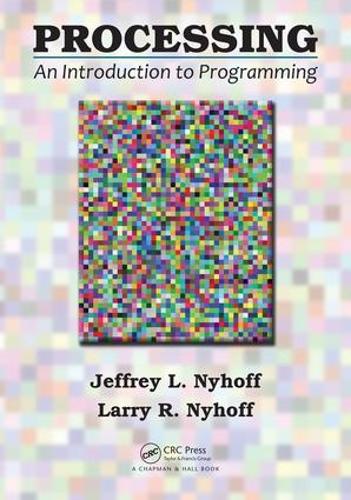
Processing :An Introduction to Programming
paperback
Published:
16 May, 2017

Popular Books by Larry R. Nyhoff
View All Books by Larry R. Nyhoff
Description
This book demonstrates how Processing is an excellent language for beginners to learn the fundamentals of computer programming. Originally designed to make it simpler for digital artists to learn to program, Processing is a wonderful first language for anyone to learn. Given its origins, Processing enables a multimodal approach to programming instruction, well suited to students with interests in computer science or in the arts and humanities.
The book uses Processing’s capabilities for graphics and interactivity in order to create examples that are simple, illustrative, interesting, and fun. It is designed to appeal to a broad range of readers, including those who want to learn to program to create digital art, as well as those who seek to learn to program to process numerical information or data. It can be used by students and instructors in a first course on programming, as well as by anyone eager to teach them self to program.
Following a traditional sequence of topics for introducing programming, the book introduces key computer science concepts, without overwhelming readers with extensive detail. The conversational style and pace of the book are based upon the authors’ extensive experience with teaching programming to a wide variety of beginners in a classroom. No prior programming experience is expected.
More Details
| Type | Book |
|---|---|
| ISBN13 | 9781482255959 |
| ISBN10 | 1482255952 |
| Number Of Pages | 544 |
| Item Weight | 1056 g |
| Publisher / Reseller | Taylor & Francis Inc |
| Format | paperback |
Media Reviews
"[This] new book directly targets the CS classroom in a way that no other Processing book does….[The authors] present a much less reactionary approach integrating many of the wonderful things about Processing with traditional approaches that have worked well in CS pedagogy. Not only is their approach sensible and efficient, it’s also likely to offer greater comfort to existing CS instructors (who perhaps don’t have degrees in theater or painting.) It is this effort of considerate integration-of the old tried and true and new and improved-that I believe has the greatest chance of tipping the balance for Processing’s use in the computing classroom."
--Ira Greenberg, Southern Methodist University, Dallas, Texas, USA
Author's Bio
Jeff Nyhoff, Ph.D., is Professor of Computer Science at Trinity Christian College in Palos Heights, Illinois.
Larry Nyhoff, Ph.D., is Professor Emeritus of Computer Science at Calvin College in Grand Rapids, Michigan.