When Baseball Met Big Bill Haywood :The Battle for Manchester, New Hampshire, 1912-1916
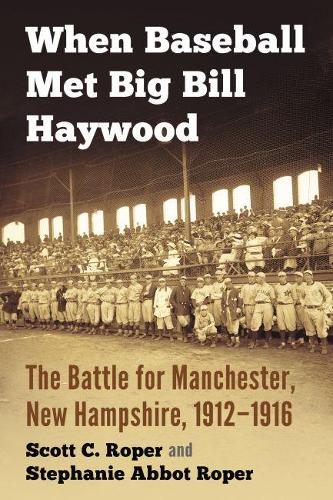
When Baseball Met Big Bill Haywood :The Battle for Manchester, New Hampshire, 1912-1916
paperback
Published:
21 December, 2017

Description
In the early 20th century, immigration, labor unrest, social reforms and government regulations threatened the power of the country's largest employers. The Amoskeag Manufacturing Company of Manchester, New Hampshire, remained successful by controlling its workforce, the local media, and local and state government. When a 1912 strike in nearby Lawrence, Massachusetts, threatened to bring the Industrial Workers of the World union to Manchester, the company sought to reassert its influence. Amoskeag worked to promote company pride and to Americanize its many foreign-born workers through benevolence programs, including a baseball club.
Textile Field, the most advanced stadium in New England outside of Boston when it was built in 1913, was the centerpiece of this effort. Results were mixed--the company found itself at odds with social movements and new media outlets, and Textile Field became a magnet for conflict with all of professional baseball.
More Details
| Type | Book |
|---|---|
| ISBN13 | 9781476665467 |
| ISBN10 | 147666546X |
| Number Of Pages | 252 |
| Item Weight | 318 g |
| Product Dimensions | 152 x 229 x 13 mm |
| Publisher / Reseller | McFarland & Co Inc |
| Format | paperback |
Media Reviews
“An absorbing narrative of how baseball was used as an Americanization technique not only to forestall the threat of immigrant workers forming a labor union in the largest cotton textile mill in the world, but also to defend its dominant influence on public affairs in Manchester, New Hampshire. The authors have an engaging style, which effectively mixes scholarly research with clear prose to develop the narrative.”—Charlie Bevis, author of Red Sox vs. Braves in Boston; “When Baseball Met Big Bill Haywood should be of great interest both to labor historians and baseball historians, particularly those who enjoy the history of New England.”—Krister Swanson, author of Baseball’s Power Shift: How the Players Union, the Fans, and the Media Changed American Sports Culture.
Author's Bio
Scott C. Roper is a professor of geography at Castleton University. He specializes in North American cultural, historical, and ethnic geography and material-culture studies. Stephanie Abbot Roper is a senior instructor at Rivier University and an adjunct professor at Nashua Community College, where she teaches a variety of courses in U.S. history and cultural geography.