PEFA, Public Financial Management, and Good Governance - International Development in Focus
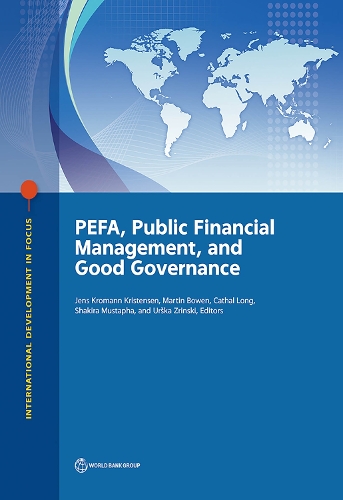
PEFA, Public Financial Management, and Good Governance - International Development in Focus
paperback
Published:
30 January, 2020

Popular Books by World Bank
View All Books by World Bank



Description
This project, based on the Public Expenditure and Financial Accountability (PEFA) data set, researched how PEFA can be used to shape policy development in public financial management (PFM) and other major relevant policy areas such as anticorruption, revenue mobilization, political economy analysis, and fragile states.
The report explores what shapes the PFM system in low- and middle-income countries by examining the relationship between political institutions and the quality of the PFM system. Although the report finds some evidence that multiple political parties in control of the legislature is associated with better PFM performance, the report finds the need to further refine and test the theories on the relationship between political institutions and PFM.
The report addresses the question of the outcomes of PFM systems, distinguishing between fragile and nonfragile states. It finds that better PFM performance is associated with more reliable budgets in terms of expenditure composition in fragile states, but not aggregate budget credibility. Moreover, in contrast to existing studies, it finds no evidence that PFM quality matters for deficit and debt ratios, irrespective of whether a country is fragile or not.
The report also explores the relationship between perceptions of corruption and PFM performance. It finds strong evidence of a relationship between better PFM performance and improvements in perceptions of corruption. It also finds that PFM reforms associated with better controls have a stronger relationship with improvements in perceptions of corruption compared to PFM reforms associated with more transparency.
The last chapter looks at the relationship between PEFA indicators for revenue administration and domestic resource mobilization. It focuses on the credible use of penalties for noncompliance as a proxy for the type of political commitment required to improve tax performance. The analysis
shows that countries that credibly enforce penalties for noncompliance collect more taxes on average.
More Details
| Type | Book |
|---|---|
| ISBN13 | 9781464814662 |
| ISBN10 | 146481466X |
| Number Of Pages | 166 |
| Item Weight | 478 g |
| Product Dimensions | 215 x 279 x 8 mm |
| Publisher / Reseller | World Bank Publications |
| Format | paperback |