When you buy a used copy YOU SAVE

0.6Kg of CO2

75 litre(s) of Water

0.0045 Tree(s)

1 book donated to global literacy projects
Windows PowerShell Pocket Reference
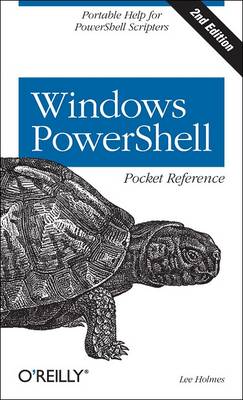
Windows PowerShell Pocket Reference
paperback
Published:
4 January, 2013
paperback
Published:
4 January, 2013

Standard worldwide delivery by
Tue, August 4 - Fri, August 7
Order within
0

Popular Books by Lee Holmes
View All Books by Lee Holmes







Description
This portable reference to Windows PowerShell 3.0 summarizes the command shell and scripting language, and provides a concise reference to the many tasks that make PowerShell so useful. If you're a busy Windows administrator, and don't have time to plow through huge books or search online, this is the ideal on-the-job tool. Written by Microsoft PowerShell team member Lee Holmes, and excerpted from his Windows PowerShell Cookbook, this edition offers up-to-date coverage of PowerShell 3.0. You'll find information on the .NET classes and legacy tools you need to manage your system, along with chapters on how to write scripts, manage errors, and format output. Beginning with a guided tour of Windows PowerShell, this handy guide covers: PowerShell language and environment Regular expression reference XPath quick reference .NET string formatting .NET DateTime formatting Selected .NET classes and their uses WMI reference Selected COM objects and their uses Selected events and their uses Standard PowerShell verbs
More Details
| Type | Book |
|---|---|
| ISBN13 | 9781449320966 |
| ISBN10 | 1449320961 |
| Number Of Pages | 150 |
| Item Weight | 1000 g |
| Publisher / Reseller | O'Reilly Media, Inc, USA |
| Format | paperback |
| Edition | 2nd edition |
See More +
Author's Bio
Lee Holmes is a developer on the Microsoft Windows PowerShell team, and has been an authoritative source of information about PowerShell since its earliest betas. His vast experience with Windows PowerShell enables him to integrate both the 'how' and the 'why' into discussions. Lee's involvement with the PowerShell and administration community (via newsgroups, mailing lists, and blogs) gives him a great deal of insight into the problems faced by all levels of administrators and PowerShell users alike.