Principles of Food Sanitation - Food Science Text Series
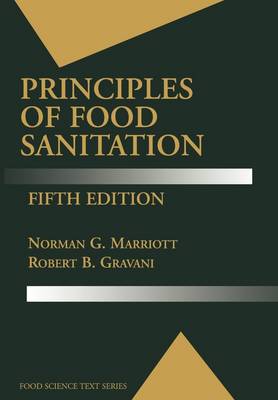
Principles of Food Sanitation - Food Science Text Series
paperback
Published:
29 November, 2010

Popular Books by Norman G. Marriott
View All Books by Norman G. Marriott
Description
In this era of emphasis on food safety and security, high-volume food processing and preparation operations have increased the need for improved sanitary practices from processing to consumption. This trend presents a challenge for the food processing and food preparation industry.
Now in its 5th Edition, the highly acclaimed Principles of Food Sanitation provides sanitation information needed to ensure hygienic practices and safe food for food industry personnel as well as students. The highly acclaimed textbook and reference addresses the principles related to contamination, cleaning compounds, sanitizers, cleaning equipment. It also presents specific directions for applying these concepts to attain hygienic conditions in food processing or food preparation operations.
New features in this edition include:
- A new chapter on the concerns about biosecurity and food sanitation
-
- Updated chapters on the fundamentals of food sanitation, contamination sources and hygiene, Hazard Analysis Critical Control Points, cleaning and sanitizing equipment, and waste handling disposal
-
- Comprehensive and concise discussion about sanitation of low-, intermediate-, and high-moisture foods
More Details
| Type | Book |
|---|---|
| ISBN13 | 9781441920386 |
| ISBN10 | 1441920382 |
| Number Of Pages | 413 |
| Item Weight | 1000 g |
| Publisher / Reseller | Springer-Verlag New York Inc. |
| Format | paperback |
| Edition | Softcover reprint of hardcover 5th ed. 2006 |
Media Reviews
"This 4th revision of the previously successful text is designed to teach the subject of food plant sanitation to an educated audience. It is not intended for individuals with no scientific knowledge. It can be used as an excellent textbook for an undergraduate college level food plant sanitation course. It is written for students who may not have an introductory science background. For example, the authors describe and define microorganisms (bacteria, yeast, mold viruses) and describe typical microbial growth. Because of this basic approach to sanitation, this text could serve students who need knowledge about sanitation but may lack some of the required background, such as restaurant or hotel managers and food service majors. Topics covered include those that are required for a food plant sanitation course: government rules and regulations, biosecurity, microorganisms, food contamination, employee hygiene, HACCP, quality assurance, cleaning and sanitizing, sanitation equipment, pest control, and chapters that cover specific food types (low-moisture food, dairy, meat and poultry, seafood, fruit and vegetables, beverage, food service) and management and sanitation. The topics are well-described and clearly explained. This text could be used to supplement courses that deal with specific topics such as meat science or fruit and vegetable processing. The appropriate chapters could be employed in discussions of sanitation in these facilities. I highly recommend this text."
- Scott Martin, Dept. of Food Science and Human Nutrition, University of Illinois
Journal of Food Science Education Volume 5 Issue 2 April 2006