Researching Social Change :Qualitative Approaches
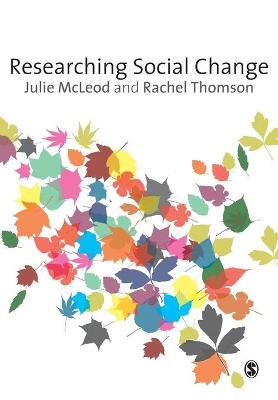
Researching Social Change :Qualitative Approaches
paperback
Published:
26 March, 2009

Popular Books by Julie McLeod
View All Books by Julie McLeod
Description
The authors showcase a range of methods that explore temporality and the dynamic relations between past, present and future. Through case studies, they review six methodological traditions: memory-work, oral/life history, qualitative longitudinal research, ethnography, intergenerational and follow-up studies. It illustrates how these research approaches are translated into research projects and considers the practical as well as the theoretical and ethical challenges they pose. Research methods are also the product of times and places, and this book keeps to the fore the cultural and historical context in which these methods developed, the theoretical traditions on which they draw, and the empirical questions they address.
Researching Social Change is an invaluable resource for researchers and graduate students across the social sciences who are interested in understanding and researching social change.
More Details
| Type | Book |
|---|---|
| ISBN13 | 9781412928878 |
| ISBN10 | 1412928877 |
| Number Of Pages | 200 |
| Item Weight | 360 g |
| Publisher / Reseller | SAGE Publications Inc |
| Format | paperback |
Media Reviews
This book will undobutedly be a key reference work in the fast growing area of qualitative analyses of social change -
International Journal of Social Research Methodology
This is a scholarly and thoughtful book. It is clearly written and accessible with useful summaries of the main points at each chapter end…It provides a valuable resource for qualitative social researchers and students, being packed with references and further resources across a range of research traditions
Social Research Association News
The book has broad appeal to anyone interested in researching social change, at whatever stage they are at in their career. It provides not only a useful introduction to a range of methods but also helps the researcher to consider their positioning within their own project. The authors write enthusiastically about research and celebrate the fact that it should be a
collaborative process, two important concepts for any qualitative researcher to remember
Qualitative Research
Author's Bio
Julie McLeod is Professor in Records Management at Northumbria University. She is the Programme Leader for the MSc and BSc in Information and Records Management distance learning courses. Her research is in records management, specifically the people, process, systems, and governance aspects, and she has directed many projects including AC+erm, the largest AHRC grant awarded for records management research. She plays an active role in the profession. See Rachel Thomson is Professor of Social Resaerch in the School of Health and Social Welfare. Rachel has been involved in a major longitudinal qualitative study of young people transitions to adulthood, funded by the Economic and Social Research Council since 1996 through the Children 5-16 and the Young People, Citizenship and Social Change programmes. The study is currently being archived with the support of a grant from the ESRC, and will be made available for secondary analysis (see www.lsbu.ac.uk/inventingadulthoods). Her research interests focus on gender identities, social change, sexuality, values, transitions and popular culture.