
1.54Kg of CO2

192 litre(s) of Water

0.0115 Tree(s)

1 book donated to global literacy projects
Dead Zone: Where the Wild Things Were
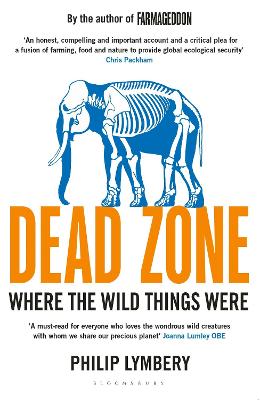
Dead Zone: Where the Wild Things Were
paperback | English
Published:
12 January, 2017


Popular Books by Philip Lymbery
View All Books by Philip Lymbery
Description
More Details
| Type | Book |
|---|---|
| ISBN13 | 9781408868263 |
| ISBN10 | 1408868261 |
| Number Of Pages | 384 |
| Item Weight | 559 g |
| Product Dimensions | 152 x 33 x 231 mm |
| Publisher / Reseller | Bloomsbury Publishing |
| Format | paperback |
| Edition | 1st Edition |
Media Reviews
An honest, compelling and important account and a critical plea for a fusion of farming, food and nature to provide global ecological security -- Chris Packham
A must-read for everyone who loves the wondrous wild creatures with whom we share our precious planet -- Joanna Lumley OBE
Dead Zone is a very important book ... Conservationists, corporations and governments must find a way to end this devastation before it is too late -- Jane Goodall, PhD, DBE
This eye-opening book, urging a massive rethink of how we raise livestock and how we feed the world, deserves global recognition * Hugh Fearnley-Whittingstall on Farmageddon *
A timely and important book -- Tony Juniper, environmentalist, author and Special Adviser to the Prince of Wales's International Sustainability Unit
Cheap, factory-farmed meat is killing us and killing the planet - in terms of its impact on our water, forest, soils and biodiversity. `Dead Zone' lays bare those ecocidal connections -- Jonathan Porritt, Founder and Director of Forum for the Future
Highly informed, utterly compelling... Lymbery's narrative threads are subtle and replete with powerful evidence... He does a superb job of equipping us with the hard facts. No author can do more -- Mark Cocker * New Statesman *
A slam dunk of factory farming * Irish Times *
GoodReads Reviews
Author's Bio
Philip Lymbery is chief executive of leading international farm animal welfare organisation, Compassion in World Farming (Compassion), and Visiting Professor at the University of Winchester. His book, Farmageddon: The True Cost of Cheap Meat, was chosen as one of The Times Writers' Books of the Year in 2014, and was cited by the Mail on Sunday as a compelling `game-changer'. He played leading roles in many major animal welfare reforms, including Europe-wide bans on veal crates for calves and barren battery cages for laying hens. Described as one of the food industry's most influential people, he has spearheaded Compassion's engagement work with over 700 food companies worldwide, leading to real improvements in the lives of over three quarters of a billion farm animals every year.