Why Victorian Literature Still Matters - Wiley-Blackwell Manifestos
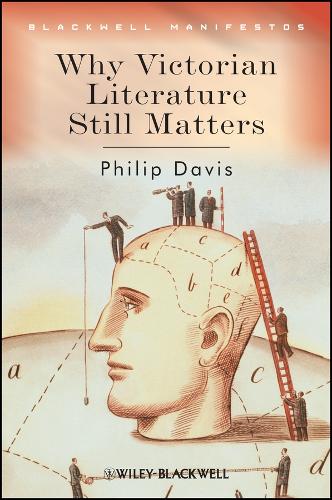
Why Victorian Literature Still Matters - Wiley-Blackwell Manifestos
paperback
Published:
19 September, 2008

Popular Books by Philip Davis
View All Books by Philip Davis
Description
- Explores the prominence of Victorian literature for contemporary readers and academics, through the author’s unique insight into why it is still important today
- Provides new frames of interpretation for key Victorian works of literature and close readings of important texts
- Argues for a new engagement with Victorian literature, from general readers and scholars alike
- Seeks to remove Victorian literature from an entrenched set of values, traditions and perspectives - demonstrating how vital and resonant it is for modern literary and cultural analysis
More Details
| Type | Book |
|---|---|
| ISBN13 | 9781405135795 |
| ISBN10 | 1405135794 |
| Number Of Pages | 184 |
| Item Weight | 290 g |
| Product Dimensions | 152 x 229 x 15 mm |
| Publisher / Reseller | John Wiley and Sons Ltd |
| Format | paperback |
Media Reviews
"Philip Davis's Blackwell manifesto offers a spirited, polemical defence of Victorian literature in general, and Victorian realism in particular, against its modernist and postmodernist detractors." (Oxford Journals, 1 June 2011)
"In Why Victorian Literature Still Matters, Davis writes as a reader. Readers, as he defines them, are different from scholars and critics. Who distance themselves from the worlds before them by turning to history or theory instead. Readers, by contrast, do not distance themselves at all, but rather seek ever more closeness." (Victorian Studies, Winter 2010)"Philip Davis's [book] ... Was fascinating about Victorian writing, and one of the best books written about how novels can work." (The Guardian, November 2008)
GoodReads Reviews
Author's Bio
Philip Davis is Professor of English Literature in the School of English, University of Liverpool, UK. He is the author of The Victorians and, most recently, Bernard Malamud: A Writer's Life. His other books include The Experience of Reading; Real Voices: On Reading, and Memory and Writing: from Wordsworth to Lawrence, as well as works on Shakespeare and Samuel Johnson. He is also editor of The Reader, a non-academic literary magazine aimed at the serious reader.