Recent Advances in QSAR Studies :Methods and Applications - Challenges and Advances in Computational Chemistry and Physics
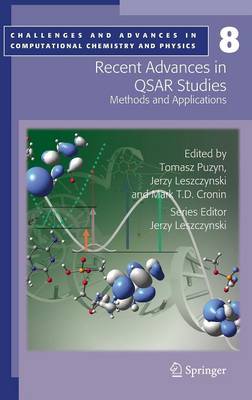
Recent Advances in QSAR Studies :Methods and Applications - Challenges and Advances in Computational Chemistry and Physics
hardback
Published:
3 December, 2009
hardback
Published:
3 December, 2009

Standard worldwide delivery by
Tue, July 7 - Fri, July 10
Order within
0
Popular Books by Jerzy Leszczynski
View All Books by Jerzy Leszczynski







Description
Since the inception of this volume, the world's nancial climate has radically changed. Theemphasishasshiftedfromboomingeconomiesandeconomicgrowth totherealityofrecessionanddiminishingoutlook. Witheconomicdownturncomes opportunity,inallareasofchemistryfromresearchanddevelopmentthroughto productregistrationandriskassessment,replacementsarebeingsoughtforcostly time-consumingprocesses. Leadingamongstthereplacementsaremodelswithtrue predictivecapability. Ofthesecomputationalmodelsarepreferred. This volume addresses a broad need within various areas of the "chemical industries", from pharmaceuticals and pesticides to personal products to provide computationalmethodstopredicttheeffects,activitiesandpropertiesofmolecules. Itaddressestheuseofmodelstodesignnewmoleculesandassesstheirfateand effectsbothtotheenvironmentandtohumanhealth. Thereisanemphasisrunning throughoutthisvolumetoproducerobustmodelssuitableforpurpose. Thevolume aimstoallowthereaderto nddataanddescriptorsanddevelop,discoverandutilise validmodels. Gdansk, ' Poland TomaszPuzyn Jackson,MS,USA JerzyLeszczynski Liverpool,UK MarkT. D. Cronin May2009 CONTENTS Part I Theory of QSAR 1 QuantitativeStructure-ActivityRelationships(QSARs)- ApplicationsandMethodology...3 Mark T. D. Cronin 1. 1. Introduction...3 1. 2. PurposeofQSAR...4 1. 3. ApplicationsofQSAR...4 1. 4. Methods...5 1. 5. TheCornerstonesofSuccessfulPredictiveModels ...7 1. 6. AValidated(Q)SARoraValidPrediction? ...9 1. 7. UsinginSilicoTechniques ...9 1. 8. NewAreasforinSilicoModels...11 1. 9. Conclusions...11 References ...11 2 TheUseofQuantumMechanicsDerivedDescriptorsin ComputationalToxicology...13 Steven J. Enoch 2. 1. Introduction...13 2. 2. TheSchrodingerEquation...15 2. 3. Hartree-FockTheory...17 2. 4. Semi-EmpiricalMethods:AM1andRM1...18 2. 5. ABInitio:DensityFunctionalTheory...19 2. 6. QSARforNon-ReactiveMechanismsofAcute(Aquatic) Toxicity...19 2. 7. QSARsforReactiveToxicityMechanisms...21 2. 7. 1. AquaticToxicityandSkinSensitisation...21 2. 7. 2. QSARsforMutagenicity ...24 2. 8. FutureDirectionsandOutlook...25 2. 9. Conclusions...26 References ...26 vii viii Contents 3 MolecularDescriptors...29 Viviana Consonni and Roberto Todeschini 3. 1. Introduction...29 3. 1. 1. De nitions...29 3. 1. 2. History...31 3. 1. 3. Theoreticalvs. ExperimentalDescriptors...33 3. 2. MolecularRepresentation ...35 3. 3. TopologicalIndexes...38 3. 3. 1. MolecularGraphs...38 3. 3. 2. De nitionandCalculationofTopologicalIndexes(TIs) 39 3. 3. 3. Graph-TheoreticalMatrixes...42 3. 3. 4. ConnectivityIndexes ...48 3. 3. 5. CharacteristicPolynomial ...50 3. 3. 6. SpectralIndexes ...53 3. 4. AutocorrelationDescriptors ...
More Details
| Type | Book |
|---|---|
| ISBN13 | 9781402097829 |
| ISBN10 | 1402097824 |
| Number Of Pages | 414 |
| Item Weight | 1000 g |
| Publisher / Reseller | Springer-Verlag New York Inc. |
| Format | hardback |
| Edition | 2010 ed. |
See More +