Neo-traditionalism in Islam in the West :Orthodoxy, Spirituality and Politics
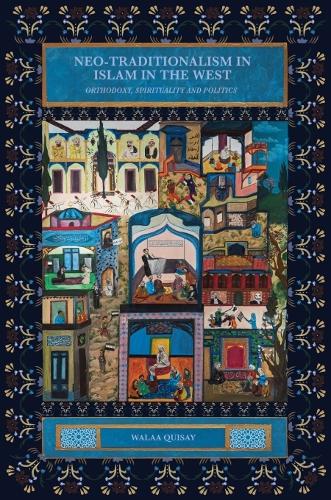
Neo-traditionalism in Islam in the West :Orthodoxy, Spirituality and Politics
hardback
Published:
10 July, 2023

Popular Books by Walaa Quisay
View All Books by Walaa Quisay
Description
Prizes
Short-listed for Muslim World Book Award 2025 (UK)
More Details
| Type | Book |
|---|---|
| ISBN13 | 9781399502771 |
| ISBN10 | 1399502778 |
| Number Of Pages | 296 |
| Item Weight | 1000 g |
| Publisher / Reseller | Edinburgh University Press |
| Format | hardback |
Media Reviews
Neo-Traditionalism in Islam in the West serves as a valuable resource in comprehending the impact of neo-traditionalism on the religious and political outlooks of Western Muslims. [...] In the context of today’s society, the book’s strengths enhance our understanding of the intricate dynamics of Islamic neo-traditionalism. By delving into its repercussions on religious practices, political engagement, and the shaping of identities, the book offers an encompassing perspective of a multifaceted phenomenon. -- Fariz Alnizar, Universitas Nahdlatul Ulama Indonesia * Religion, 2023 *
Addressing the phenomenon of Islamic "neo-traditionalism", Dr Quisay skilfully analyses not only the positions of its most prominent advocates and acolytes, but also the larger epistemological and ethical contexts in which it has developed. She brings out clearly the aspirations, as well as the disillusionment, associated with these efforts to re-enchant the world. -- Charles Tripp, SOAS University of London
Engagements of Islam with modernity are crucial chapters in the history of both. In this in-depth and resolutely even-handed exploration, Walaa Quisay shows how a neo-traditionalist strand of Sufism has developed in contention with modernity’s disenchantment of the world. For readers concerned with alternative formations of Islam in relation to modernity, Neo-traditionalism in Islam in the West is a significant resource. Readers more generally will find it relevant to understanding other neo-traditionalist movements around the globe. -- John R. Hall, University of California, Davis and Santa Cruz
[A] deft examination of the rise of neo-traditionalist Islamic movements in the United States and the United Kingdom. Drawing on immersive fieldwork and ethnography, Quisay theorizes neo-traditionalist Islam as “an orientation that emphasizes the primacy of a notion of ‘tradition’ and sees a moral and political imperative in its resurrection” (4). She traces how religious authority is produced and disseminated by prominent white American and British shuyukh such as Hamza Yusuf, Abdal Hakim Murad, and Umar Faruq Abd-Allah, and the mostly brown and Black student “seekers” who gravitate toward them. In so doing, she presents a layered portrait of neo-traditionalist discourses that advocate for spiritual return and a revival of the sacred while entangled within the racial, gendered, and geopolitical dynamics of a post-9/11 world. * Tazeen M. Ali, Washington University *
Quisay’s meticulously crafted narrative offers not just a scholarly exploration but a profound reflection on the multifaceted dimensions of religious identity and community resilience in the contemporary Western Muslim experience. Through her insightful analysis and compelling storytelling, the author not only illuminates the challenges faced by Western Muslim communities but also celebrates their resilience and adaptability in navigating the complexities of modernity. -- Sri Dewi Priwarti Siregar * International Journal of Religious Tourism and Pilgrimage *
In the last two decades, most of the research focused on Islamist movements, political Islam, Salafi movements, and reformist Islam in the West. However, Walaa Quisay's work goes beyond this to explore the rise of neo-traditionalism, often understudied, as an emerging alternative Islamic authority in the West. -- Mohamed Fouz Mohamed Zacky * IIUM Journal of Religion and Civilisational Studies *
Author's Bio
Walaa Quisay is Leverhulme Early Career Fellow at The School of Divinity, University of Edinburgh. Previously, she worked at the University of Manchester, the University of Birmingham, and Istanbul Şehir University. She has published extensively on neo-traditionalism and is currently working on carceral theologies. This will be her first monograph.