The Baltic Story :A Thousand-Year History of Its Lands, Sea and Peoples
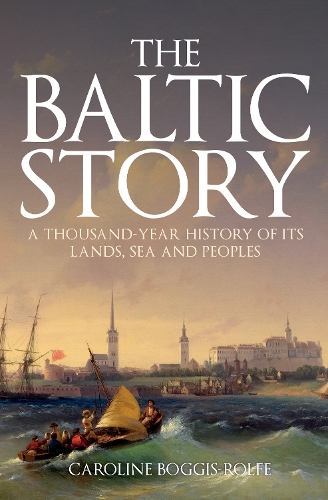
The Baltic Story

The Baltic Story :A Thousand-Year History of Its Lands, Sea and Peoples

paperback
Published: 15 September, 2020
Standard worldwide delivery by Wed, June 24 - Mon, June 29
Order within 0
Condition: NEW
$17.94
RRP $18.79
You save $0.85 (5%)
Price includes shipping
Available 20+ in stock
- +
FREE Returns within 30 days

Description

The Baltic Story recounts the shared history of the countries around the Baltic, from the events of a thousand years ago to today. It shows the ties of blood and commerce that have bound the different lands which now lie in Denmark, Sweden, Finland, Estonia, Latvia, Lithuania, Poland, Western Russia and eastern Germany. The narrative encompasses the foundation of some of Europe’s greatest cities, including St Petersburg, Stockholm, Copenhagen and Gdánsk. The earliest settlers created a commercial network. As these Hansa merchants became wealthier, they began to impose on the political affairs of their neighbours. In Poland, descendants of her first rulers eventually united their territories and created a state offering religious tolerance and an elective monarchy. Meanwhile, one of Europe’s most ancient dynasties, the Oldenburgs, assumed power in Denmark, but the king was deposed after his massacre of Swedish nobles. When Gustav Vasa takes the Swedish throne, the Kalmar Union collapses. The Catholic king of Poland invades Russia and his son is elected tsar. Russia’s turmoil ends with the election of Michael, the first of the Romanovs. As the feud between the Poles and Swedes continues, Karl X ravages Poland and moves on to Denmark, where he crosses the frozen sea to attack Copenhagen. Having stood firm against further Swedish assault, the Danish king attains absolute power. This history shows the growth of autocracy, from Denmark’s absolutist kings to the opulent world of the eighteenth-century Russian empresses. It analyses the period of the Enlightenment, in particular the achievements of Frederick II of Prussia and Catherine II of Russia and the problems facing Poland that ended with the country’s collapse. And it shows how Enlightenment thinking influenced Denmark and Sweden and rocked the monarchies. It also explores the threat of Napoleon’s France to the Baltic and the impact of the First World War and the Russian Revolution, which led to the radical re-shaping of the region.
See more

More Details

Type Book
ISBN13 9781398103306
ISBN10 1398103306
Number Of Pages 464
Item Weight 414 g
Publisher / Reseller Amberley Publishing
Format paperback
See More +

GoodReads Reviews

Author's Bio

Caroline Boggis-Rolfe is a writer and lecturer. After receiving a B.A. in Italian from London University, she followed her husband to Berlin in 1969 where he worked for the British Commanders’-in-Chief Mission to the Soviet Forces. Their proximity and access to Iron Curtain countries piqued Caroline’s interest in the Baltic region, and she was able to regularly visit Dresden, Leipzig, and Potsdam in the 1970s. This led to her first work of history, The Baltic Story. Her interest in northern Europe was renewed thanks to her thesis on Voltaire, who knew both Frederick II of Prussia and Catherine II of Russia. Over the past ten years, Caroline has been a regular visitor to the Baltic as a guest lecturer. Caroline's new book draws on her Italian degree and experience of living on the Adriatic coast, where she began to research the long history of the nations of the region. She holds a Master and Doctor of French from UCL.

Show more