Second World Postmodernisms :Architecture and Society under Late Socialism
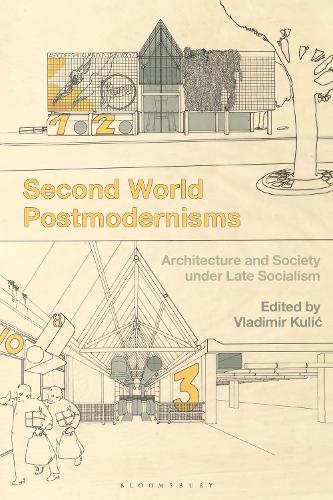
Second World Postmodernisms :Architecture and Society under Late Socialism
paperback
Published:
24 December, 2020

Popular Books by Vladimir Kulic
View All Books by Vladimir Kulic
Description
If postmodernism is indeed 'the cultural logic of late capitalism', why did typical postmodernist themes like ornament, colour, history and identity find their application in the architecture of the socialist Second World? How do we explain the retreat into paper architecture and theoretical discussion in societies still nominally devoted to socialist modernization?
Exploring the intersection of two areas of growing scholarly interest - postmodernism and the architecture of the former socialist world - this edited collection stakes out new ground in charting architecture's various transformations in the 1970s and 80s. Fourteen essays together explore the question of whether or not architectural postmodernism had a specific Second World variant.
The collection demonstrates both the unique nature of Second World architectural phenomena and also assesses connections with western postmodernism. The case studies cover the vast geographical scope from Eastern Europe to China and Cuba. They address a wealth of aesthetic, discursive and practical phenomena, interpreting them in the broader socio-political context of the last decades of the Cold War. The result provides a greatly expanded map of recent architectural history, which redefines postmodernist architecture in a more theoretically comprehensive and global way.
More Details
| Type | Book |
|---|---|
| ISBN13 | 9781350166189 |
| ISBN10 | 1350166189 |
| Number Of Pages | 272 |
| Item Weight | 420 g |
| Product Dimensions | 150 x 232 x 18 mm |
| Publisher / Reseller | Bloomsbury Publishing PLC |
| Format | paperback |
Media Reviews
An important book for our understanding of the cultures of late socialism, and one which has the capacity to stimulate further research far beyond the domain of architectural history itself. * Journal of Contemporary History *
Author's Bio
Vladimir Kulic is Associate Professor, College of Design, Iowa State University.