International Intellectual Property and the ASEAN Way :Pathways to Interoperability
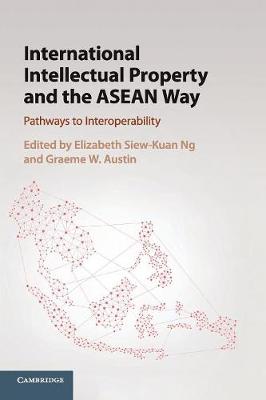
International Intellectual Property and the ASEAN Way :Pathways to Interoperability
paperback
Published:
13 December, 2018

Popular Books by Graeme W. Austin
View All Books by Graeme W. Austin
Description
More Details
| Type | Book |
|---|---|
| ISBN13 | 9781316616307 |
| ISBN10 | 1316616304 |
| Number Of Pages | 354 |
| Item Weight | 540 g |
| Product Dimensions | 153 x 230 x 18 mm |
| Publisher / Reseller | Cambridge University Press |
| Format | paperback |
Media Reviews
'… a very innovative collection of scholarly works on a rather archaic area of ASEAN economic integration efforts. The authors take into consideration the diversity of intellectual property regime and propose a series of pathways forward within that woefully uneven IP terrain. The end result is a very convincing concept of 'IP interoperability' as a first step on the long journey towards a more robust and unified set of standards for intellectual property protection in an emerging AEC. … a major contribution within the myriad limitations and variation of legal regimes in ASEAN.' Surin Pitsuwan, former Secretary-General of the Association of Southeast Asian Nations (ASEAN) (2008–12)
'We live in a moment of upheaval and uncertainty, with increasing awareness of the costs associated with a one-size-fits-all approach to intellectual property rights. As the pendulum swings away from a commitment to worldwide harmonization, an intriguing alternative has emerged: the ASEAN model of 'interoperability'. The ASEAN Way, introduced in this excellent collection of essays, defines a common set of IP-related values while respecting and accommodating countries' cultural and economic differences. This volume should be required reading for anyone involved in charting the future course of global IP policy.' Stacey Dogan, Boston University School of Law
'This examination of a range of intellectual property issues occurring in ASEAN countries offers a detailed analysis of national laws in an increasingly important region of the world. But it also explores how the concept of interoperability functions in each of legislative, judicial and administrative settings, presenting a mechanism for reconciling respect for national diversity with demands for greater commonality. The editors present an optimistic vision for what can be achieved in tackling this most central dilemma of international intellectual property law, which is a helpful intellectual provocation as more longstanding mechanisms of international law struggle to make progress on that dilemma.' Graeme B. Dinwoodie, University of Oxford
Author's Bio
Elizabeth Siew-Kuan Ng is Deputy Chairwoman and Director of the Intellectual Property Unit at the Centre for Law and Business, and Associate Professor of Law at the National University of Singapore's Law School. She was appointed amicus curiae by the Singapore Court of Appeal on IP matters and is an IP Adjudicator of the Intellectual Property Office of Singapore. She is a Barrister-at-law of Middle Temple (England) and Advocate and Solicitor (Supreme Court, Singapore). A Fellow of Cambridge Commonwealth Society, she was a consultant of the World Intellectual Property Organization (Switzerland). Graeme W. Austin is Professor of Law at Melbourne University with a joint appointment as Chair of Private Law at Victoria University of Wellington. He is co-author of the pathbreaking text, Human Rights and Intellectual Property: Mapping the Global Interface (Cambridge, 2011). Before returning to Australasia in 2011, he was the J. Byron McCormick Professor of Law at the University of Arizona, where he convened the intellectual property programme. He is a former Member of the New Zealand Copyright Tribunal.