The Model of Poesy
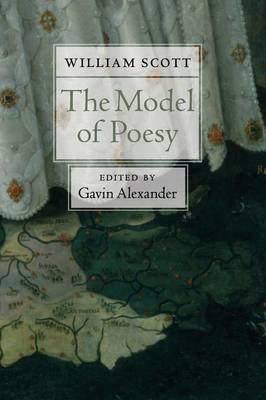
The Model of Poesy
paperback
Published:
7 January, 2016

Popular Books by William Scott
View All Books by William Scott


Description
More Details
| Type | Book |
|---|---|
| ISBN13 | 9781316505588 |
| ISBN10 | 1316505588 |
| Number Of Pages | 350 |
| Item Weight | 470 g |
| Product Dimensions | 152 x 229 x 19 mm |
| Publisher / Reseller | Cambridge University Press |
| Format | paperback |
Media Reviews
'Alexander's editorial skills are dazzling … All writers should be blessed with such editors.' Russ McDonald, The Times Literary Supplement
'… Alexander's edition of William Scott's Model of Poesy is exemplary … for anyone working in any way with the literature, and the literary scene, of the sixteenth century's last two or three decades, Scott's Model is indispensable, and it is our immense good fortune that its first modern edition has been prepared by someone with the technical expertise … the capacity for thorough research … and the stylistic elegance of Gavin Alexander.' Roger Kuin, The Spenser Review
'Scott's manuscript provides critics with fresh access to a comprehensive and well-arranged early modern exegesis on poetic theory and practice … Scott's treatise, and Alexander's edition, offers perhaps the most exciting literary discovery of recent years.' Hannah Leah Crummé, Renaissance Quarterly
'Gavin Alexander's splendid scholarly edition of William Scott's Model of Poesy (1599) contributes to early modern literary studies in ways that will have lasting effects … In ambition and comprehensiveness, Alexander's contribution as an editor matches that of Scott as a critic … So learned in the rhetorical and critical traditions known to the Elizabethans is Alexander's introduction that it stands as a major work of scholarship in its own right.' Donald Stump, Sydney Journal
'The recent discovery of the manuscript of William Scott's previously unknown Model of Poesy (c.1599), with its wealth of allusions to contemporary writers including Shakespeare, Spenser, Sidney, and Daniel, represents a major addition to the corpus of Elizabethan literary criticism. And Gavin Alexander's magisterial edition, exemplary in the range and depth of its scholarship, is in every way worthy of its subject.' Stanley Wells, The Shakespeare Birthplace Trust
Author's Bio
Gavin Alexander is a University Senior Lecturer in the Faculty of English at the University of Cambridge and a Fellow of Christ's College. His publications include Writing after Sidney: The Literary Response to Sir Philip Sidney, 1586–1640 (2006), Sidney's 'The Defence of Poesy' and Selected Renaissance Literary Criticism (2004), a co-edited volume, Renaissance Figures of Speech (2007), and numerous articles and book chapters on literary and musicological topics. He teaches at undergraduate and postgraduate level across a wide range of topics, from ancient to modern literature, with a particular emphasis on Renaissance literature, the history and theory of literary criticism, and textual studies. His online Renaissance palaeography course 'English Handwriting' is widely used around the world. In 2008 he was awarded a Pilkington Teaching Prize for excellence in teaching at the University of Cambridge.