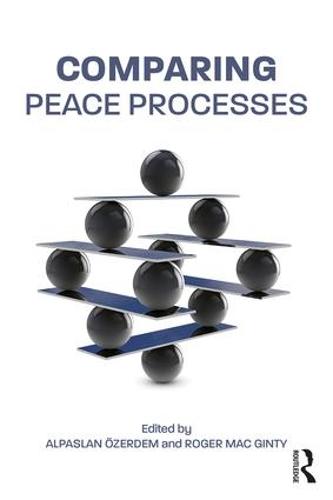
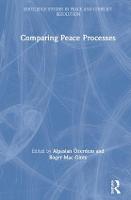
Comparing Peace Processes - Routledge Studies in Peace and Conflict Resolution
Comparing Peace Processes - Routledge Studies in Peace and Conflict Resolution
paperback
Published:
1 April, 2019

Popular Books by Alpaslan Özerdem
View All Books by Alpaslan Özerdem
Description
This book offers a comparative survey of 18 contemporary peace processes conducted by leading international scholars.
There is no standard model of peace processes and all will vary according to the context, type of conflict, timing, national and global economic climate, and factors like natural disasters. Therefore, making comparisons between peace processes is difficult, but it is beneficial – indeed, imperative – and is the principal motivation behind this volume. What works in one context may not work in another, but it can be modified and adapted to fit another context.
The book is structured to maximise comparison between processes, and the case studies chosen are topical and span the major regions of the world. The concluding chapter systematically compares the case studies around 11 variables that cover the conflict context, peace process procedures, the responsiveness of the peace process to demands, and levels of participation and inclusion. Each peace process is then given a numeric score according to each of these variables, and the book thereby reaches judgements on whether each case can be termed a ‘success’ or a ‘failure’.
This book will be essential reading for students of peace studies, conflict resolution, war and conflict studies, security studies, and IR.
More Details
| Type | Book |
|---|---|
| ISBN13 | 9781138218970 |
| ISBN10 | 1138218979 |
| Number Of Pages | 366 |
| Item Weight | 592 g |
| Publisher / Reseller | Taylor & Francis Ltd |
| Format | paperback |
Media Reviews
"Whilst there has been extensive research on the peace agreements themselves, the processes that led to specific outcomes are often ignored or regarded as 'too difficult'. As this book shows the processes themselves are not only worthy of study, but critical in the determination of the peaceful outcomes of each case. A valuable framework facilitates comparison across a very broad selection of cases that should provide the standard text on this subject for some years."--Paul Jackson, University of Birmingham, UK
"Two of Britain’s leading scholars of conflict resolution and peace building have assembled a first-class group of contributors in a seminal volume on comparative peace processes in no fewer than 18 different settings. The essays contain a wealth of new material and conceptual insights into the multiple challenges of peace building. It is a book that will appeal to scholars and practitioners of conflict resolution and peacebuilding, not least because it offers a major theoretical advancement to our understanding of the social, economic and political dynamics of peace process. The volume will appeal to students and practitioners alike not least because it challenges our basic assumptions about the workings of any peace process."—Fen Osler Hampson, Carleton University, Canada
"The issue of peace process design is a central one for mediators and international organisations supporting peace processes. However, until now it has not been the subject of sustained academic inquiry. This book provides an extensive and systematic comparative case study approach to understanding process design. The book sets out an overall framework for understanding process design and is vital reading for students and practitioners alike."-- Christine Bell, University of Edinburgh, UK
Author's Bio
Alpaslan Özerdem is Associate-Pro-Vice Chancellor Research at Coventry University, UK. He is co-editor of Local Ownership in International Peacebuilding (Routledge, 2015), co-author of Peacebuilding: An Introduction (Routledge, 2016), and co-editor of Conflict Transformation and the Palestinians (Routledge, 2017).
Roger Mac Ginty is Professor of Defence, Diplomacy and Development at the Durham Global Security Institute, Durham University, UK. He edits the journal Peacebuilding and co-directs the Everyday Peace Indicators project.