Conciliarism, Humanism and Law :Justifications of Authority and Power, c. 1400–c. 1520
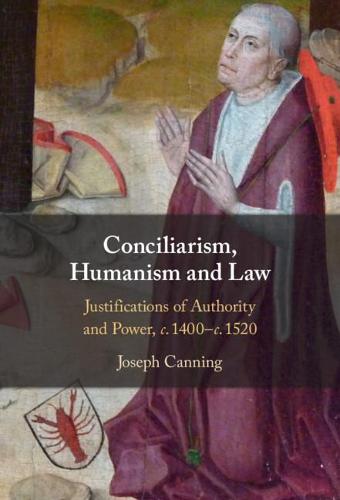
Conciliarism, Humanism and Law :Justifications of Authority and Power, c. 1400–c. 1520
hardback
Published:
1 July, 2021

Popular Books by Joseph Canning
View All Books by Joseph Canning



Description
More Details
| Type | Book |
|---|---|
| ISBN13 | 9781108831796 |
| ISBN10 | 1108831796 |
| Number Of Pages | 216 |
| Item Weight | 460 g |
| Product Dimensions | 158 x 235 x 15 mm |
| Publisher / Reseller | Cambridge University Press |
| Format | hardback |
Media Reviews
'This book does something new: no-one has looked at the justifications of power through the lenses of conciliarism, humanism and law in this way before. Canning refreshes the study both of conciliarists' ideas and of the political thought of Italian Renaissance humanists.' David D'Avray, University College London
'This comprehensive survey demonstrates the wide range of political ideas current on the eve of the Reformation. As such, it is crucial for understanding theories of power during the transition from medieval to modern Europe.' Antony Black, University of Dundee
'The particular merit of the present study is that it places three formative forms of late medieval political culture on an equal footing and follows their characteristics and developmental tendencies.' Thomas Wolki, Sehepunkte
Author's Bio
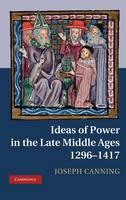
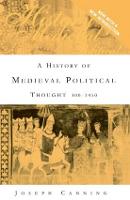
Joseph Canning is Affiliated Lecturer in the Faculty of History at the University of Cambridge. A Fellow of the Royal Historical Society, he is the author of The Political Thought of Baldus de Ubaldis (1987), A History of Medieval Political Thought, c.300-c.1450 (1996) and Ideas of Power in the Late Middle Ages, 1296-1417 (2011).