The Cambridge Companion to Constantinople - Cambridge Companions to the Ancient World
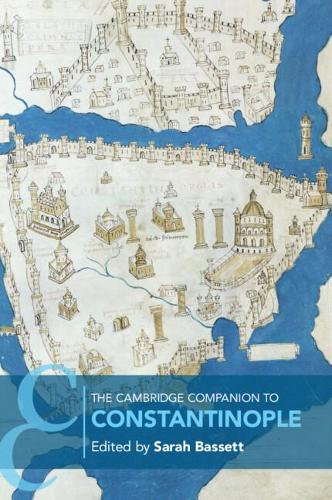
The Cambridge Companion to Constantinople - Cambridge Companions to the Ancient World
paperback
Published:
17 March, 2022
paperback
Published:
17 March, 2022

Standard worldwide delivery by
Wed, July 29 - Fri, August 7
Order within
0
Popular Books by Sarah Bassett
View All Books by Sarah Bassett
Description
From its foundation in the fourth century, to its fall to the Ottoman Turks in the fifteenth, 'Constantinople' not only identified a geographical location, but also summoned an idea. On the one hand, there was the fact of Constantinople, the city of brick and mortar that rose to preeminence as the capital of the Roman Empire on a hilly peninsula jutting into the waters at the confluence of the Sea of Marmora, the Golden Horn, and the Bosporos. On the other hand, there was the city of the imagination, the Constantinople that conjured a vision of wealth and splendor unrivalled by any of the great medieval cities, east or west. This Companion explores Constantinople from Late Antiquity until the early modern period. Examining its urban infrastructure and the administrative, social, religious, and cultural institutions that gave the city life, it also considers visitors' encounters with both its urban reality and its place in imagination.
More Details
| Type | Book |
|---|---|
| ISBN13 | 9781108705578 |
| ISBN10 | 110870557X |
| Number Of Pages | 434 |
| Item Weight | 710 g |
| Product Dimensions | 151 x 228 x 20 mm |
| Publisher / Reseller | Cambridge University Press |
| Format | paperback |
See More +
Media Reviews
'… an immensely valuable volume that should be part of any library devoted to the study of Constantinople or Byzantine History. It should quickly prove to be a standard reference for instructors, students, and researchers.' Rebecca Stephens Falcasantos, Plekos
GoodReads Reviews
Author's Bio
Sarah Bassett is Associate Professor in the Art History Department at Indiana University and author of The Urban Image of Late Antique Constantinople (Cambridge, 2004). Her research interests include late antique urbanism, collecting and display in the late antique world, and the historiography of late antique and Byzantine art.