Commerce and Peace in the Enlightenment
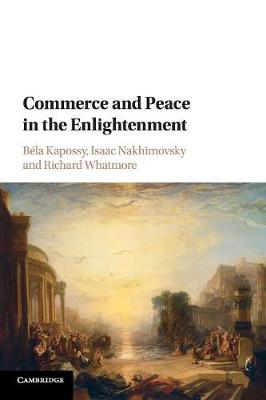
Commerce and Peace in the Enlightenment
paperback
Published:
13 December, 2018

Popular Books by Isaac Nakhimovsky
View All Books by Isaac Nakhimovsky
Description
More Details
| Type | Book |
|---|---|
| ISBN13 | 9781108403979 |
| ISBN10 | 1108403972 |
| Number Of Pages | 364 |
| Item Weight | 520 g |
| Product Dimensions | 150 x 230 x 20 mm |
| Publisher / Reseller | Cambridge University Press |
| Format | paperback |
Media Reviews
'Commerce and Peace in the Enlightenment is a stimulating and well-crafted testament to the influence of a beloved mentor and colleague.' Paul Cheney, Journal of Modern History
Author's Bio
Béla Kapossy is Professor of History at Université de Lausanne, Switzerland. He has been involved in a number of research projects on enlightenment political and economic thought and has written widely on Swiss, French and British intellectual history. Isaac Nakhimovsky is Assistant Professor of History and the Humanities at Yale University, Connecticut. Richard Whatmore is Professor of Modern History at the University of St Andrews, Scotland, where he is also the Director of the St Andrews Institute of Intellectual History. He has written a number of books and published articles in many of the major academic journals in intellectual history.