
1.84Kg of CO2

230 litre(s) of Water

0.0138 Tree(s)

1 book donated to global literacy projects
Learning Scientific Programming with Python
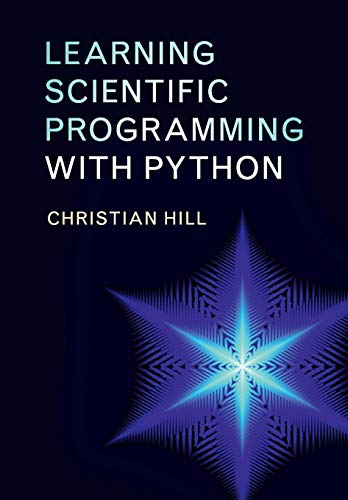
Learning Scientific Programming with Python
paperback
Published:
29 March, 2016


Popular Books by Christian Hill
View All Books by Christian Hill
Description
More Details
| Type | Book |
|---|---|
| ISBN13 | 9781107428225 |
| ISBN10 | 110742822X |
| Number Of Pages | 460 |
| Item Weight | 909 g |
| Product Dimensions | 174 x 32 x 244 mm |
| Publisher / Reseller | Cambridge University Press |
| Format | paperback |
Media Reviews
'This book is well illustrated and is supported by an extensive collection of resources online in the book's website, scipython.com. This site has code listings and solutions to exercises. I would readily recommend this book to any student (or even a colleague) who wishes to achieve a solid foundation in Python programming.' Vasudevan Lakshminarayanan, Contemporary Physics
Author's Bio
Christian Hill is a physicist and physical chemist at University College London and the University of Oxford. He has over twenty years' experience of programming in the physical sciences and has been programming in Python for ten years. His research uses Python to produce, analyse, process, curate and visualise large data sets for the prediction of the properties of planetary atmospheres.