Homer: Odyssey Book IX - Cambridge Greek and Latin Classics
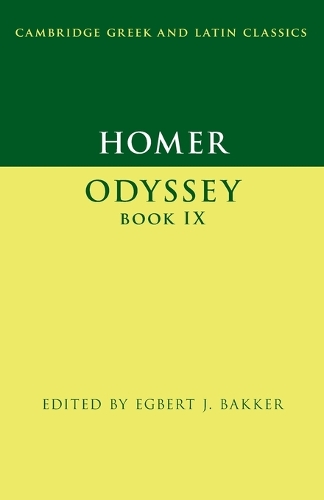
Homer: Odyssey Book IX - Cambridge Greek and Latin Classics
paperback
Published:
23 January, 2025
paperback
Published:
23 January, 2025

Standard worldwide delivery by
Fri, July 10 - Tue, July 21
Order within
0
Popular Books by Egbert J. Bakker
View All Books by Egbert J. Bakker
Description
Book IX of the Odyssey is one of the most often read and discussed sections of Homeric poetry. It contains Odysseus' narrative of his encounter with Polyphemus the Cyclops, which not only typifies him as the trickster-hero that he is, but also resonates thematically with later parts of the narrative. This edition provides solid support in reading, understanding, and enjoying this essential episode. The Commentary is designed to be helpful to undergraduates, postgraduates, and scholars, providing assistance in understanding Homeric language from elementary to advanced levels. The constant attention to narratological details contributes to the literary appreciation of the episode. The Introduction offers a particularly full guide to Homeric meter, language and dialect as well as discussing in detail the place which the Cyclops episode occupies both in the Odyssey as a whole and in Greek mythology and culture as an expression of the colonial imagination.
More Details
| Type | Book |
|---|---|
| ISBN13 | 9781107424845 |
| ISBN10 | 1107424844 |
| Number Of Pages | 271 |
| Item Weight | 350 g |
| Product Dimensions | 138 x 216 x 14 mm |
| Publisher / Reseller | Cambridge University Press |
| Format | paperback |
See More +
Author's Bio
EGBERT J. BAKKER is the Alvan Talcott Professor of Classics at Yale University. He has published widely on many aspects (linguistic, cultural, literary) of the Homeric poems among other authors and subjects – his books on Homer include Linguistics and Formulas in Homer (1988), Poetry in Speech: Orality and Homeric Discourse (1997), Pointing at the Past: From Formula to Performance in Homeric Poetics (2005), and The Meaning of Meat and the Structure of the Odyssey (Cambridge, 2013). In the present commentary he draws on all his previous research as well as on years of experience in teaching Homeric poetics and Homeric language.